Aesthetics and Expression: The AP Chinese Unit 3 Study Guide
Introduction to Beauty and Art in Chinese Culture
In Unit 3: Influences of Beauty and Art, the College Board expects you to go beyond simply identifying art forms. You must understand the perspectives behind the products and practices. Why do Chinese gardens look natural rather than geometric? Why are faces painted specific colors in opera? How does modern pop culture reflect changing societal values?
This guide covers the essential visual and performing arts, architecture, literature, and modern trends required for the AP exam.
Traditional Visual Arts: Painting and Calligraphy
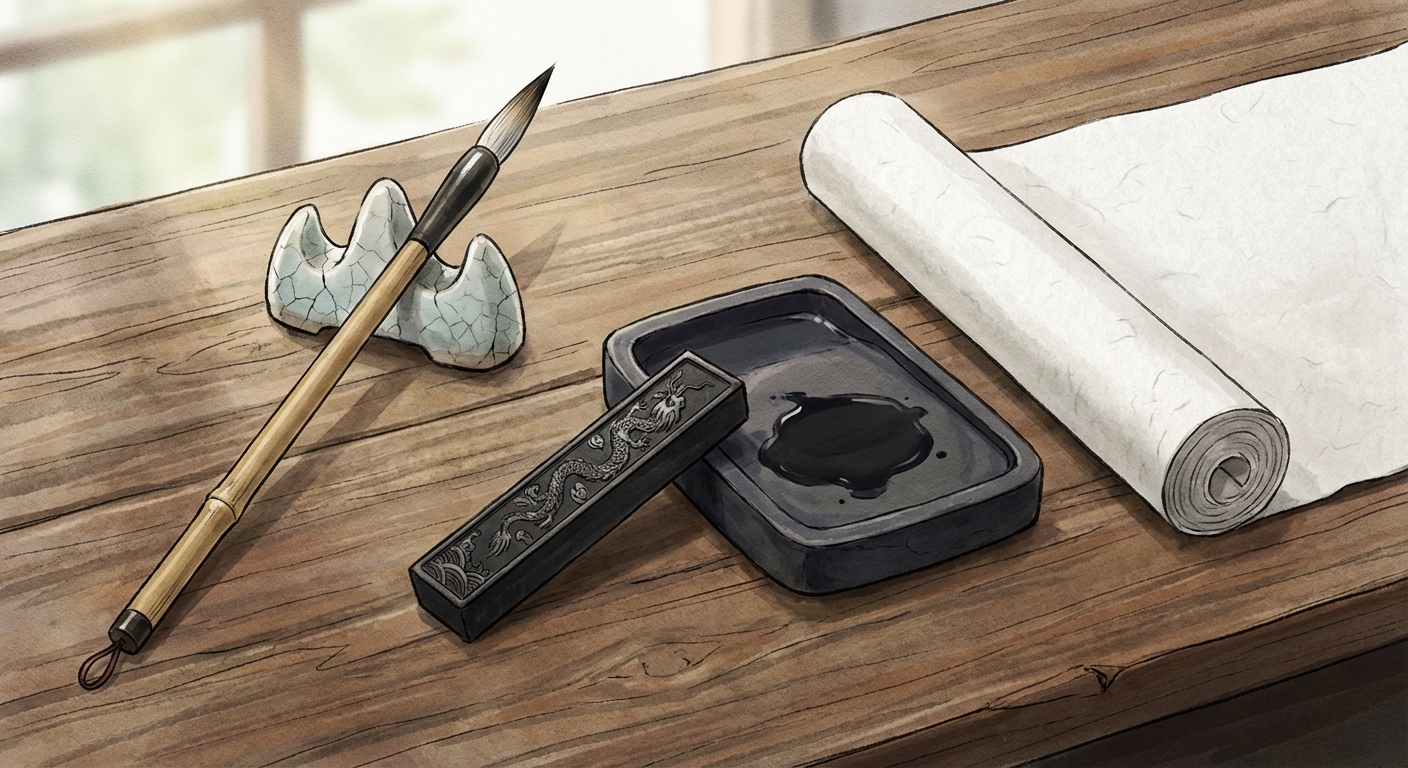
The Four Treasures of the Study (文房四宝)
Before understanding the art, you must know the tools. For over a thousand years, every scholar and artist relied on Wénfáng Sìbǎo (文房四宝):
- Brush (笔 - Bǐ): Made from animal hair (wolf, goat, rabbit).
- Ink (墨 - Mò): Solid ink sticks ground with water.
- Paper (纸 - Zhǐ): Specifically Xuan paper (Rice paper), known for absorbency.
- Inkstone (砚 - Yàn): The surface used to grind the ink.
Chinese Calligraphy (书法 - Shūfǎ)
Calligraphy is considered the highest form of visual art in China—even higher than painting—because it reveals the artist's character and energy (Qi).
- Concept: It is not just handwriting; it is an abstract art form emphasizing rhythm, line, and structure.
- Styles: From the ancient Seal Script (used on stamps) to Cursive Script (flowing and abstract).
- Cultural Perspective: Good calligraphy implies a person is cultivated and disciplined.
Traditional Chinese Painting (国画 - Guóhuà)
Traditional painting differs significantly from Western oil painting. It uses water-based ink and pigments on paper or silk.
Key Styles:
- Gongbi (Meticulous): Detailed, precise brushstrokes, often colorful. Used for portraits and court paintings.
- Xieyi (Freehand): "Writing the meaning." Uses fewer strokes to capture the spirit of the subject rather than the physical accuracy. Closely related to calligraphy.
Major Themes:
- Shan Shui (Mountain Water - 山水): Landscape painting. It emphasizes the immensity of nature and the insignificance of humans. It often includes empty space (Liúbái) to represent clouds, water, or the unknown, inviting the viewer to imagine.
- Bird and Flower: Symbolic representations (e.g., Peonies symbolize wealth/honor; Cranes symbolize longevity).
Common Mistakes & Pitfalls:
- Mistake: Thinking Chinese art uses "perspective" like Western art.
- Correction: Western art often uses a single vanishing point. Chinese art uses shifting perspective, allowing the viewer to "walk through" the landscape as they unroll a scroll.
Performing Arts: Opera and Music
Peking Opera (京剧 - Jīngjù)
Originating in the late 18th century (Qing Dynasty), this is a synthesis of singing, dialogue, martial arts, and acrobatics. It is highly symbolic—minimal props are used (e.g., a whip represents a horse).
The Four Main Roles:
- Sheng (生): Male roles (scholars, warriors, officials).
- Dan (旦): Female roles (traditionally played by men, most famously by Mei Lanfang).
- Jing (净): Painted face males (forceful characters like generals or gods).
- Chou (丑): Clowns/Comedic roles (distinguished by a white patch on the nose).
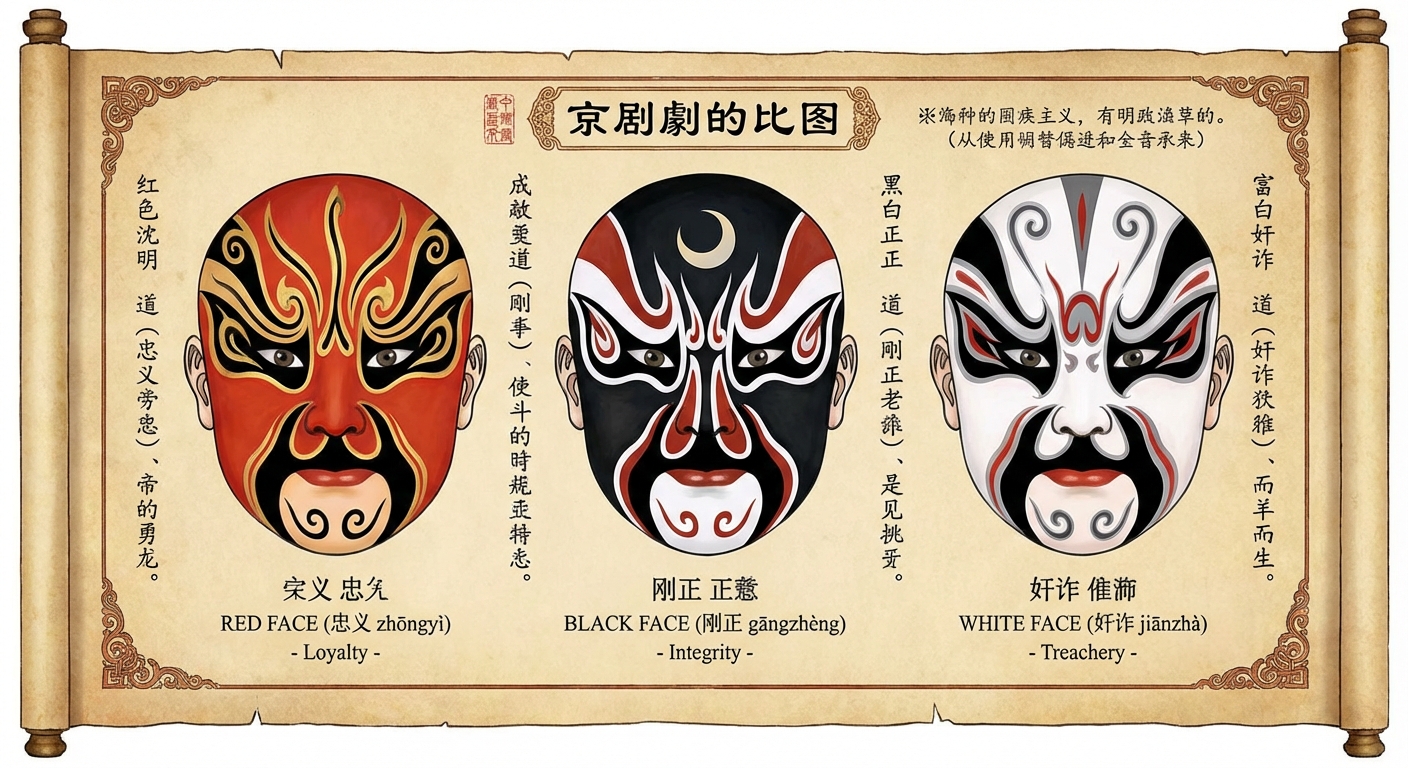
Color Symbolism (Facial Makeup - Liǎnpǔ)
The colors on a Jing performer's face tell the audience the character's personality instantly.
| Color | Meaning | Example Character |
|---|---|---|
| Red | Loyalty, Courage, Bravery | Guan Yu (Three Kingdoms hero) |
| Black | Integrity, Honesty, Impartiality | Bao Zheng (Judge Bao) |
| White | Treachery, Deceit, Cunning | Cao Cao (Warlord) |
| Yellow | Ambition, Cruelty, Intelligence | Diverse Generals |
| Gold/Silver | Gods, Spirits, Mystical beings | The Monkey King |
Traditional Music Instruments
Chinese instruments are often classified by materials (