Comprehensive Guide to Unit 1: Families in Different Societies
Unit 1: Families in Different Societies (Las familias en diferentes sociedades)
In the AP Spanish Language and Culture exam, specific attention is paid not just to vocabulary, but to the cultural comparison between your own community and a Spanish-speaking community. This unit focuses on how family structures, values, and traditions are evolving across the Spanish-speaking world.
Family Roles and Relationships (Los roles y las relaciones familiares)
Defining the Family Structure
Unlike the strict "nuclear family" model often emphasized in the United States, Hispanic cultures traditionally emphasize La Familia Extensa (the extended family). However, due to urbanization and economic changes, these structures are evolving.
- La familia nuclear: Consists of parents and children living in one household.
- La familia extensa: Includes grandparents, aunts, uncles, and cousins who may live in the same house or very close by and interact daily.
- La familia monoparental: Single-parent households, increasingly common in countries like Spain and parts of Latin America due to rising divorce rates and social acceptance.
- La familia ensamblada: Blended families resulting from remarriages.
The Concept of "Compadrazgo"
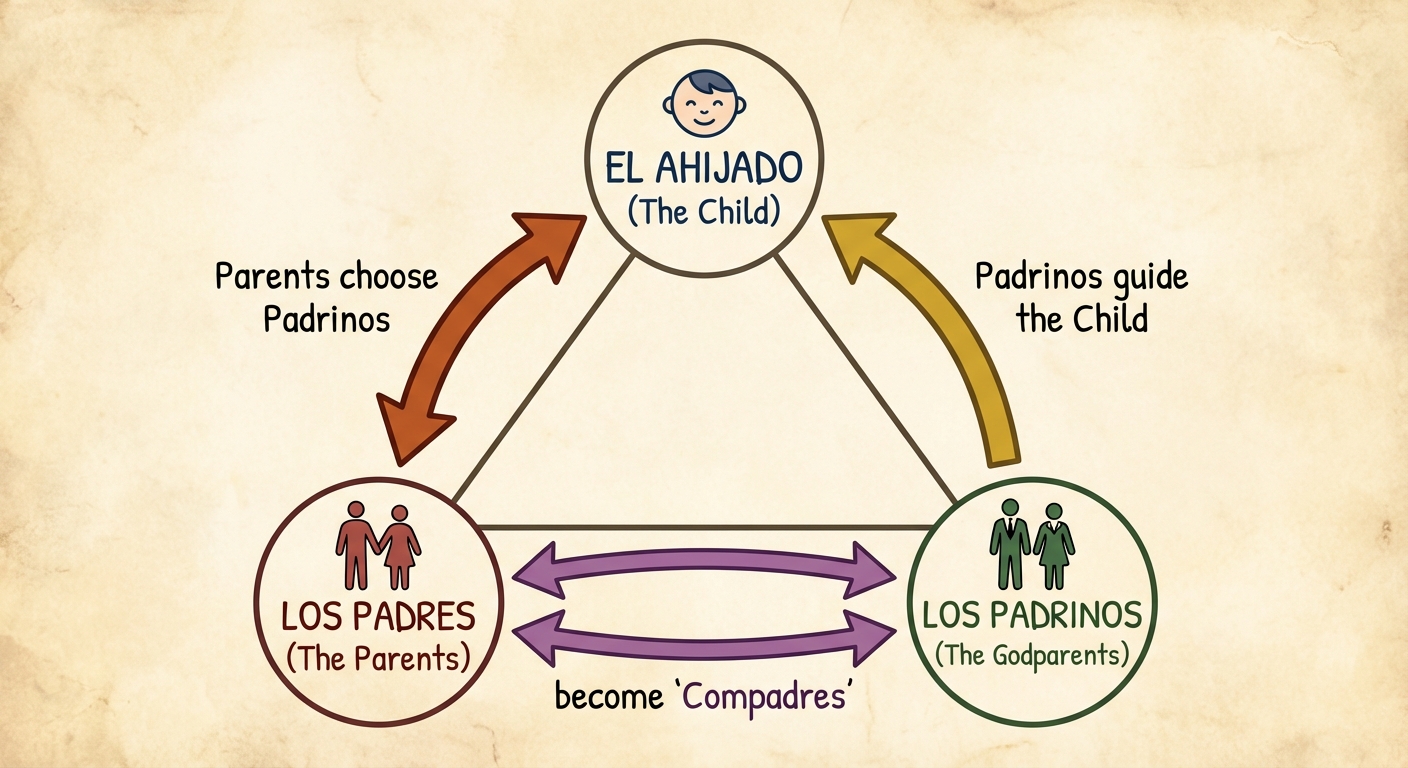
One of the most distinct features of Hispanic family structure is the institution of compadrazgo (coparenthood). This is a spiritual and social bond established through religious rites (baptism, confirmation).
- Los Padrinos: Godparents. They are expected to help raise the child, provide financial assistance if necessary, and offer spiritual guidance.
- Los Ahijados: Godchildren.
- Los Compadres: The relationship between the parents and the godparents. This is often stronger than a friendship; it is a kinship bond.
Changing Roles: Men and Women
- Traditional View: Historically influenced by Machismo (male dominance/provider role) and Marianismo (female submissiveness/spiritual superiority/domestic role).
- Modern Reality:
- Double Income: In Spain and much of Latin America (e.g., Argentina, Chile, Mexico), women are increasingly part of the professional workforce.
- Domestic Equality: While changing, the distribution of household chores (quehaceres) remains a topic of debate, with women still performing the majority of domestic labor in many regions (