Applying Big Idea 5: Team, Transform & Transmit
Collaborating as a Team
In AP Seminar, Big Idea 5 is the culmination of your research efforts. Specifically for Performance Task 1 (PT1), this phase involves moving from individual research (IRR) to a cohesive Team Multimedia Presentation (TMP). Collaboration is not merely working side-by-side; it is the synthesis of distinct perspectives into a unified argument.
Establishing Team Norms
Before diving into content, successful groups establish Team Norms. These are the explicit agreements that govern how the group functions.
- Communication Protocols: Decide on a platform (Slack, Discord, GroupMe) and response time expectations (e.g., "Must reply within 12 hours").
- Decision-Making Models: Will you use majority vote or consensus? Consensus is preferred for AP Seminar to ensure every voice is heard.
- Conflict Resolution: Agree on how to handle disagreements before they happen. Focus on the idea, not the person.
The Art of Synthesis
One of the most critical concepts in this unit is Synthesis. A common error is creating a "Frankenstein's Monster" presentation—where Student A speaks for 2 minutes, then Student B, then Student C, with no logical connection.
True synthesis occurs when individual arguments (Lenses) are woven together to support a new, broader Team Argument.
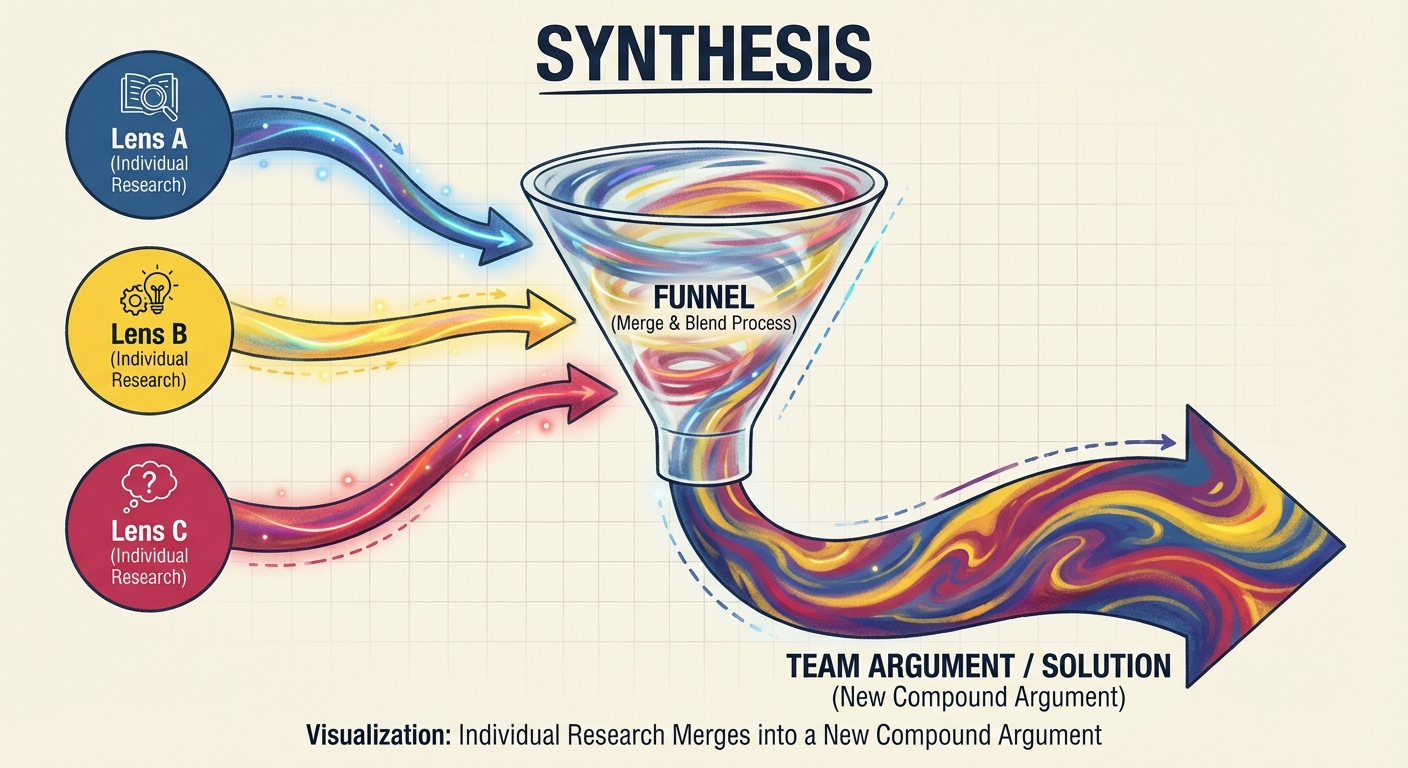
Example of Synthesis:
- Topic: Smart Cities.
- Student A (Economic Lens): researching the cost of implementation.
- Student B (Ethical Lens): researching data privacy concerns.
- Synthesis: The team argument acknowledges that while Smart Cities are economically viable (A), they cannot be ethically implemented without strict data laws (B). The solution is a hybrid policy.
Project Management Roles
While everyone must research and present, assigning functional roles can streamline the workflow:
- The Facilitator: Keeps discussions on track during meetings.
- The Sceptic: Actively looks for holes in the argument (crucial for preparing for the Oral Defense).
- The Designer: Ensures visual constituency across slides.
Presenting and Defending Arguments
Once the research is synthesized, you must "Transmit" it effectively. This involves both the visual design of the presentation and the oral delivery.
Structuring the Team Multimedia Presentation (TMP)
The TMP acts as a persuasive speech supported by visual evidence. A strong structure typically follows this flow:
- Introduction & Hook: Engage the audience immediately. State the research question clearly.
- Context & Significance: Why does this problem matter now?
- Synthesis of Perspectives: Present the various lenses (Scientific, Economic, Social) not as separate silos, but as interacting factors.
- Proposed Solution/Conclusion: Based on the evidence.
- Limitations & Implications: Honest assessment of where the solution might fail or what consequences it brings.
Multimedia Design Principles
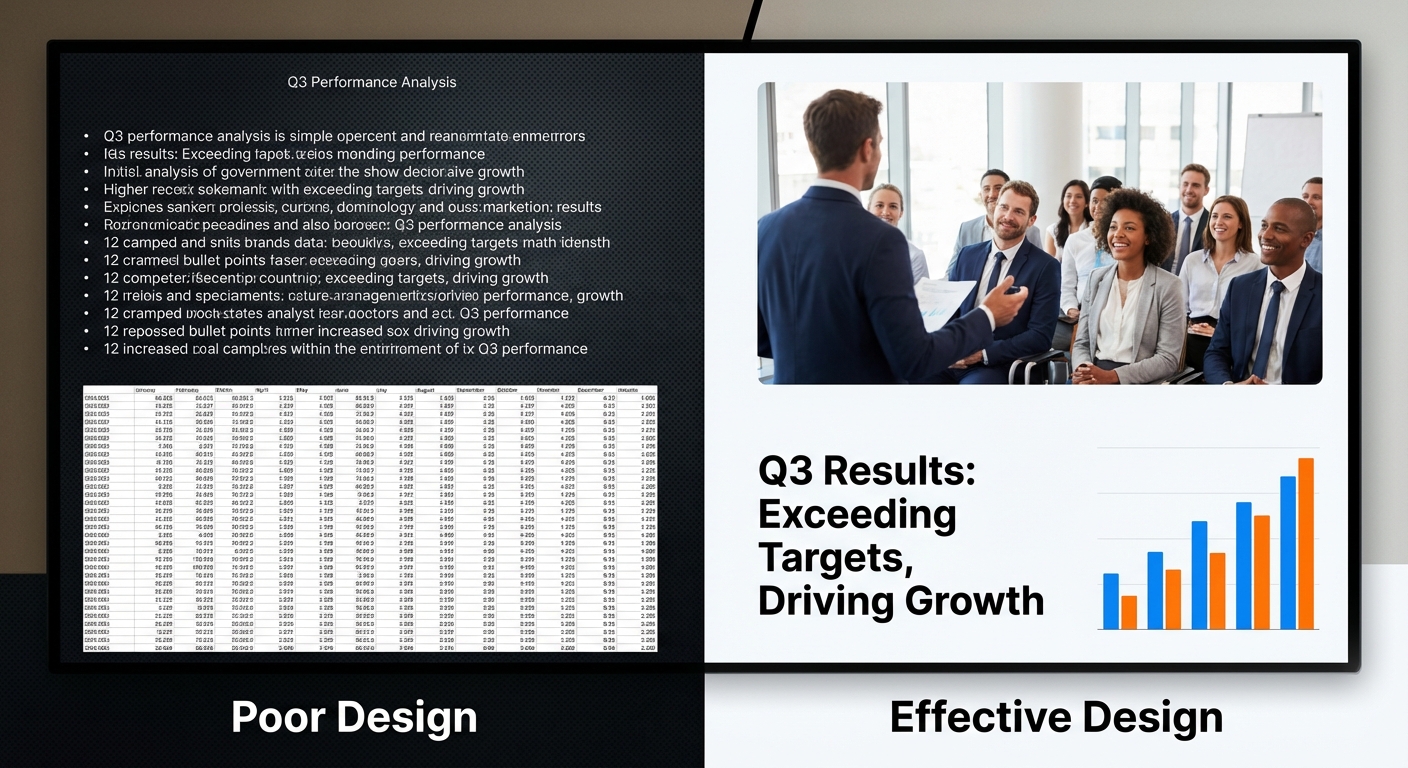
Your slides are there to enhance your speech, not repeat it. Adhere to the Assertion-Evidence model:
- Headline: A full sentence stating the main takeaway of the slide (not just "Data").
- Visual Evidence: A chart, graph, or photo that proves the headline.
- Minimize Text: If you are reading your slides, you are redundant. Aim for under 20 words per slide.
Delivery Techniques
- Vocal Variety: Vary your pitch, volume, and pace. Monotone delivery kills engagement.
- Eye Contact: Do not look at the screen. Look at the audience (or the camera/judging panel). A good rule is "Touch, Turn, Talk"—touch the slide clicker/screen, turn to the audience, then talk.
- Transitions: Use "bridging" phrases to hand off to teammates.
- Bad: "Now here is Sarah."
- Good: "While the economic costs are high, Sarah will explain why the ethical obligation outweighs the price tag."
The Oral Defense (OD)
After the 8-10 minute presentation, the teacher will ask each group member one question. This is the Oral Defense. You do not know which specific question you will get, but they fall into three categories:
- Reflection on Research Process: "How did your team's resolution change as you researched?"
- Extension of Argument: "If you had more time, what additional perspective would you research?"
- Challenge to Validity: "What is the strongest counter-argument to your solution?"
Strategy for OD: The STAR Method
- Situation: Briefly set the context.
- Task/Action: Explain what specific evidence or research you utilized.
- Result: Connect it back to the team's final conclusion.
Tip: Always reference specific evidence. Don't say "We read an article…" Say "According to the 2023 study by NASA regarding water filtration…"
Reflecting on and Revising Work
Collaboration is iterative. The first draft of your presentation should never be the final one.
The Iterative Cycle
- Drafting: Getting ideas on slides.
- Rehearsing: Timing the speech. (It must be between 8-10 minutes. Under or over is penalized).
- Critiquing: Watching a recording of the rehearsal to identify awkward transitions or weak arguments.
- Revising: Editing the script and slides based on the critique.
Peer Review & Feedback
When reviewing your teammates' work or practicing for the Oral Defense, use the "Warm/Cool" feedback protocol:
- Warm Feedback: Specific praise on content (e.g., "The transition between the environmental and political lens was very smooth.").
- Cool Feedback: Probing questions or suggestions (e.g., "I noticed you looked at the screen during the solution slide. Can we practice facing the audience?").
Common Mistakes & Pitfalls
| Mistake | Why it hurts your score | How to fix it |
|---|---|---|
| The "Silo" Presentation | It shows a lack of collaboration. The rubric requires synthesis. | Ensure every slide references at least two different perspectives/lenses. |
| Wall of Text | The audience reads the slide instead of listening to you. | Use high-quality images and only essential keywords on screen. |
| Vague Defense Answers | "We learned a lot" scores low. | Prepare index cards with specific data points from your teammates' IRRs so you can cite their work during the defense. |
| Ignoring Limitations | Making a solution sound perfect hurts credibility. | Explicitly dedicate time to explaining why your solution isn't perfect (e.g., budget constraints, political opposition). |
Mnemonic for Oral Defense Success: L.P.A.
- Listen: Listen to the entire question from the judge.
- Pause: Take 3 seconds to gather your thoughts (it shows confidence).
- Answer: Respond with specific evidence.