Mastering Unit 5: Factors Influencing Quality of Life in the Francophone World
Education and Career (L'éducation et la carrière)
In the AP French curriculum, the concept of quality of life is heavily influenced by access to education and job security. Understanding the structural differences between Francophone systems (particularly France) and Anglophone systems is crucial for the Cultural Comparison task.
The Educational Structure
French education places a high emphasis on structure, theory, and examinations. The ultimate goal for secondary students is Le Baccalauréat (Le Bac).
- L'École Maternelle: Optional but attended by nearly all children ages 3–6. Focuses on socialization and early learning.
- Le Collège: Comparison to Middle School (ages 11–15). Ends with Le Brevet.
- Le Lycée: High School (ages 15–18). Students choose streams (filières)—General, Technological, or Professional.
- Le Bac: The high-stakes exam required to enter university. It is a national standard, unlike the GPA system often found in North America.
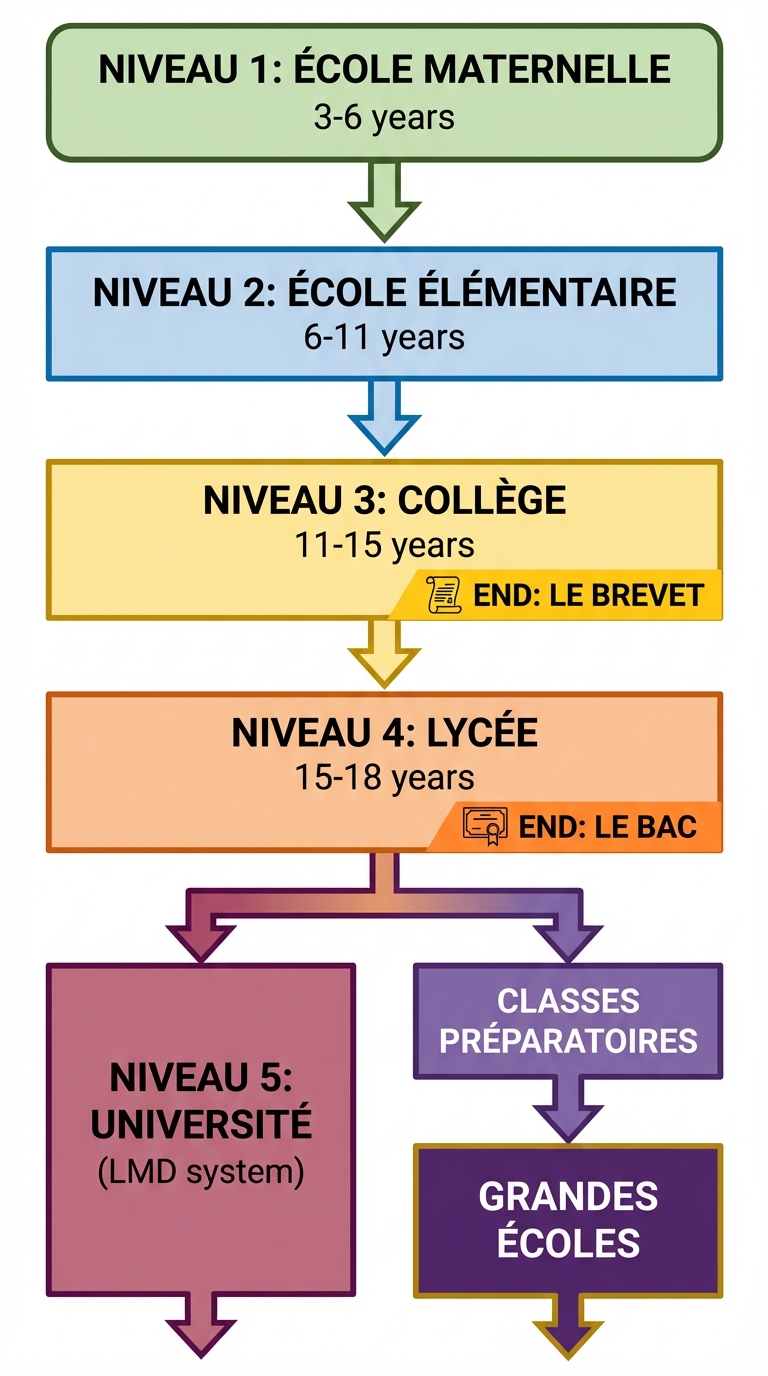
Higher Education: University vs. Grandes Écoles
A unique feature of the French system is the dual track in higher education:
- L’Université (La Fac): Open to anyone with the Bac. Tuition is heavily subsidized by the government (almost free). It is often criticized for being overcrowded but praised for accessibility.
- Les Grandes Écoles: Elite institutions (e.g., Sciences Po, Polytechnique) for business and engineering. Admission requires passing a rigorous competitive exam (le concours) often after two years of Classes Préparatoires (prépas).
The World of Work (Le Monde du Travail)
The French working culture prioritizes stability and rights (Les droits des travailleurs).
- Le CDI (Contrat à Durée Indéterminée): The "holy grail" of employment—a permanent contract that makes it difficult to fire an employee.
- Le CDD (Contrat à Durée Déterminée): A fixed-term contract, often used for seasonal or temporary work.
- Le Chômage: Unemployment. France has historically struggled with higher youth unemployment rates compared to the US, leading to the phenomenon of young graduates moving abroad.
Common Idioms for the Exam:
- Avoir le nez dans le guidon — To be overwhelmed with work/studying.
- Bosser (slang) — To work hard.
- Métro, boulot, dodo — The monotony of the daily commute/work routine.
Health and Well-Being (La santé et le bien-être)
Quality of life in France and many Francophone countries is often synonymous with social protection. The state plays a massive role in ensuring the physical well-being of its citizens.
The Healthcare System
The French system is a mix of private and public elements, primarily funded by the state.
- La Sécurité Sociale (La Sécu): The national healthcare system. It reimburses a significant portion of medical costs. It is based on the principle of solidarity: healthy people pay for the sick.
- La Carte Vitale: The green card every citizen carries containing their insurance information.
- L'accès aux soins: In many Francophone African countries (e.g., Senegal, Côte d'Ivoire), the challenge remains the digital divide and access to clinics in rural areas ('déserts médicaux'), contrasting with high access in urban France.
Nutrition and Lifestyle
There is a cultural tension between traditional eating habits and modern fast food.
- Le Paradoxe Français: The phenomenon where French people have relatively low rates of heart disease despite a diet rich in saturated fats (cheese, butter), often attributed to smaller portion sizes and lack of snacking.
- La Malbouffe: Junk food. While McDonald's is very popular in France, there is a strong counter-movement promoting Le Bio (organic food) and Le Terroir (locally sourced products from specific regions).
Mental Health Comparison Table
| Concept | France / Europe | North America |
|---|---|---|
| Approach | Traditionally more private; medication consumption (antidepressants) is high. | More open public discourse; heavy emphasis on therapy/counseling. |
| Work Stress | Regulated by law (Right to Disconnect). | Often managed by individual negotiation or company perks. |
| Cost | Mostly reimbursed by La Sécu. | dependent on private insurance coverage. |
Leisure and Sports (Les loisirs et le sport)
In the Francophone world, particularly in Europe, work is often seen as a means to enjoy life, not the purpose of life itself. This profoundly impacts the "Quality of Life."
The Culture of Vacations
- Les Congés Payés: French employees are legally guaranteed 5 weeks of paid vacation per year. This fuels a massive tourism industry within France.
- Faire le Pont: If a holiday falls on a Thursday, employees often take Friday off to "make the bridge" for a 4-day weekend.
- Juilletistes vs. Aoûtiens: The cultural split between those who take vacation in July and those who take it in August.
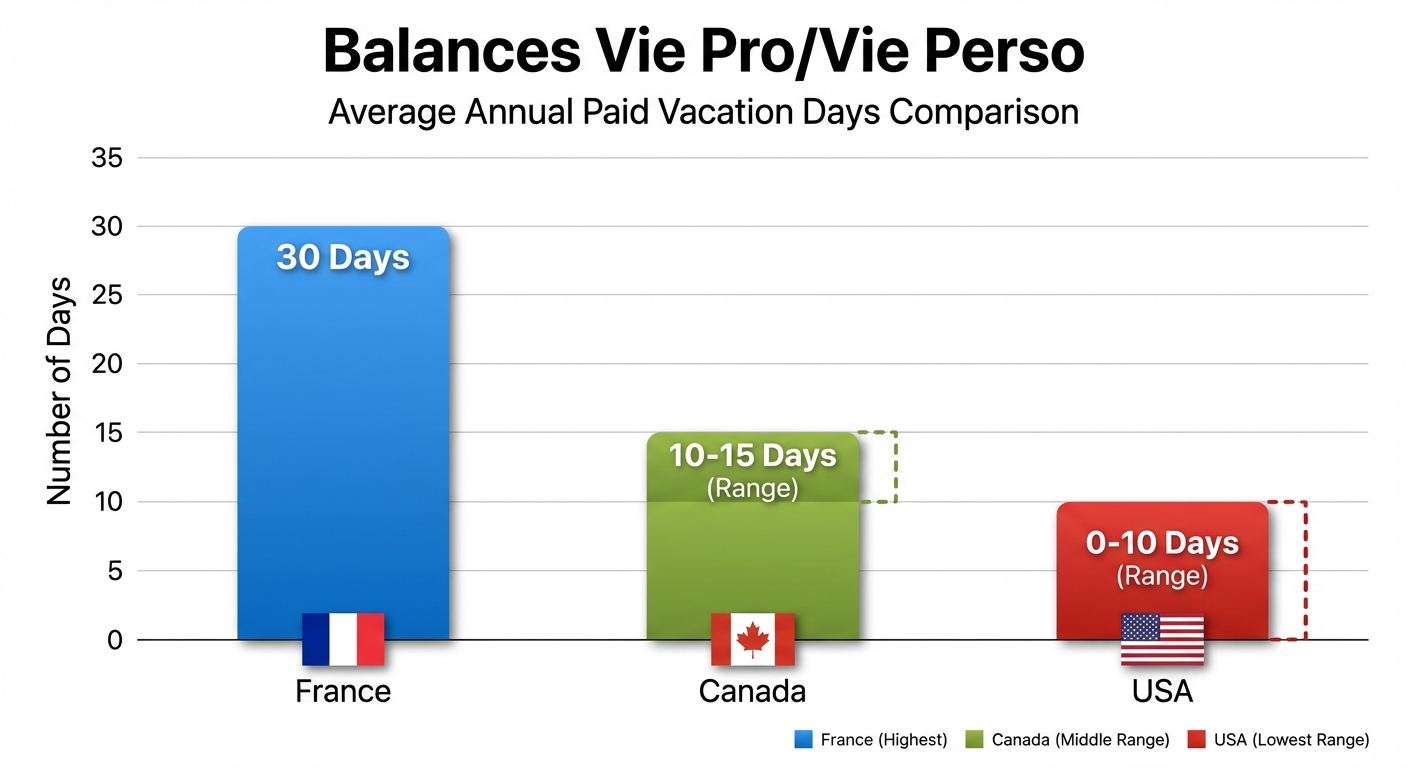
The Right to Disconnect (Le Droit à la Déconnexion)
Introduced in French law in 2017, this requires companies with more than 50 employees to establish hours when staff are not expected to send or answer emails. This is a crucial example to use in an essay about technology and well-being.
Sports and Associations
Sport is viewed both as a health necessity and a social glue.
- Le Football (Le Foot): The dominant sport in France and Francophone Africa. It is a major vehicle for social integration.
- Le Cyclisme: Culturally significant (Tour de France).
- La Vie Associative: Millions of French people volunteer in "Associations" (non-profits) for sports, arts, or charity. It represents civic engagement.
Common Mistakes & Pitfalls
Confusing "L'éducation" with "Education":
- Mistake: Using éducation to mean "schooling."
- Correction: In French, l'éducation refers to upbringing and manners taught by parents. Use l'enseignement or la scolarité for school-based learning. (Though le système éducatif is acceptable).
Misunderstanding "Le Collège":
- Mistake: Thinking le collège means "university."
- Correction: Le collège is middle school. University is l'université or la fac.
Applying US University costs to France:
- Mistake: Arguing in an essay that French students possess massive student debt.
- Correction: French university tuition is nominal (often few hundred euros/year). Housing is the main cost, not tuition.
Using the Subjunctive incorrectly with "Espérer":
- Mistake: J'espère que tu sois heureux (Subjunctive).
- Correction: Espérer takes the Indicative (Future usually). J'espère que tu seras heureux.
- Note: Expressions of necessity for health (Il est essentiel que…) DO take the subjunctive.
Stereotyping:
- Mistake: Assuming every Francophone person takes 2-hour lunches with wine.
- Correction: Modern life in cities like Paris or Montreal is fast-paced. "La pause déjeuner" has shortened significantly in recent years ($<30$ minutes for many). Acknowledge correct cultural shifts.