AP English Literature & Composition: Unit 4 (Short Fiction II)
Unit 4: Short Fiction II — Character, Setting, and Narration
This unit builds upon the foundational analysis skills from Unit 1, moving beyond basic identification of literary elements into a deeper analysis of how character complexity, narrative conflict, and narrative perspective interact to create meaning. In Unit 4, the focus shifts to the function of these elements—not just what they are, but why the author chose them.
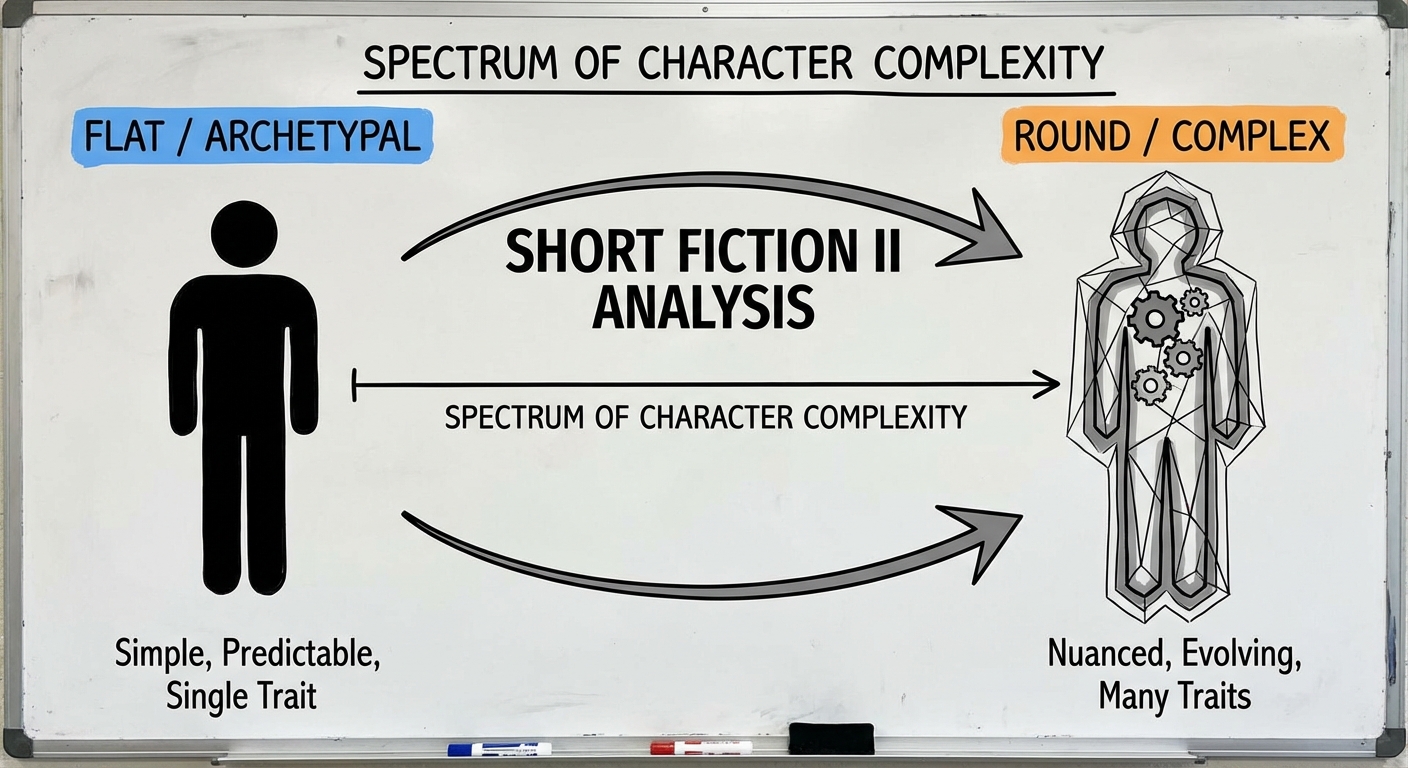
Characterization: Complexity and Nuance
In Short Fiction II, characters are analyzed not just by their traits, but by their internal conflicts, inconsistencies, and changes (or lack thereof).
Protagonist and Antagonist: Beyond Good vs. Evil
- Protagonist: The central character who drives the narrative. In AP Lit, the protagonist is not always "heroic" or even likable. The key is agency; they make decisions that move the plot.
- Key Concept: The protagonist usually undergoes a transformation or arrives at a moment of realization.
- Antagonist: The character, force, or collective opposition that resists the protagonist.
- Function: The antagonist generates conflict, which is the engine of the plot.
- Nuance: An antagonist can be an internal aspect of the protagonist (e.g., their own fear or hubris) or an abstract force (e.g., societal expectations in The Yellow Wallpaper).
Dynamic vs. Static Characters
- Dynamic Characters: undergo significant internal change (perspective, values, belief systems) due to the plot's events.
- Static Characters: remain largely unchanged.
- Analysis Tip: Do not assume a static character is poorly written. Authors often use static characters to highlight the transformation of the protagonist or to critique a rigid society.
The Epiphany
A sudden revelation or insight that alters a character's understanding of themselves or the world.
- Popularized by James Joyce, this is a staple of short fiction.
- It often occurs at the climax or resolution and dictates whether the character changes (Dynamic) or fails to change (Tragic).
Character Relationships and Foils
- Foil Characters: A character whose traits contrast sharply with another character (usually the protagonist) to highlight particular qualities of that other character.
- Example: A decisive, reckless friend highlights the protagonist's hesitation and caution.
- Relational Dynamics: Analyze power imbalances. Does one character dominate the dialogue? Does the power dynamic shift by the end of the story?
Archetypes
Universal symbols, character types, or narrative patterns appearing across cultures.
- The Hero: Overcomes adversity (e.g., Odysseus).
- The Trickster: Uses wit to defy authority (e.g., Puck).
- The Mentor: Guides the hero (e.g., Tiresias).
- The Outcast: Marginalized by society; often critiques the status quo.
- Why Identify Them? To see if the author is reinforcing a classic trope or subverting it (e.g., a "Hero" who fails constitutes a tragedy or irony).
Setting: Function and Atmosphere
In Unit 4, setting is treated as more than just a backdrop; it is functional. It can act as an antagonist, a mirror for a character's psychology, or a symbol.
Atmosphere vs. Mood
While often used interchangeably by students, there is a technical distinction in analysis:
- Atmosphere: The external feeling created by the physical environment (weather, lighting, sensory details). It is the "air" the characters breathe.
- Example: The decaying mansion, misty tarn, and gloom in Poe's Fall of the House of Usher.
- Mood: The emotional response fostered in the reader by the atmosphere and tone.
The Function of Setting
- Setting as Character/Antagonist: The environment actively works against the protagonist (e.g., the freezing cold in Jack London’s To Build a Fire).
- Setting as Mirror: The external world reflects the internal state of a character (Pathetic Fallacy).
- Example: A chaotic, stormy sea mirroring a character's inner turmoil.
- Contrast: An author may place a tragic event in an idyllic setting (e.g., The Lottery takes place on a beautiful, sunny summer day) to heighten the irony and horror.
Narration: Perspective and Distance
This is a major component of Unit 4. You must identify who is telling the story and how much they know.
Types of Narration
- First-Person ($I$, $We$): Immediate and intimate but subjective. The reader is limited to what this one character knows, sees, and biases.
- Third-Person Limited: The narrator is outside the story but tethered to one character's consciousness. We get the "objective" facts plus one person's internal thoughts.
- Third-Person Omniscient: The "God-eye" view. The narrator knows the thoughts of all characters. Useful for showing dramatic irony.
- Objective Narration: The "Camera-eye" view. Reports only observable actions and dialogue without access to internal thoughts.
Stream of Consciousness
A narrative mode that attempts to mimic the chaotic flow of a character's thought processes.
- Characteristics: Non-linear, fragmented syntax, sensory associations, lack of conventional punctuation.
- Effect: Creates extreme intimacy and realism; shows the psychological state directly rather than describing it.
Narrative Distance
The "gap" between the narrator and the story elements. This strongly influences reliability and tone.
| Type of Distance | Definition | Effect on Reader |
|---|---|---|
| Physical Distance | Narrator is far away from the action in space. | Can create detachment or a "bird's eye" view of events. |
| Chronological Distance | Time between the events and the telling. | A mature narrator looking back on their childhood self often provides insight not present at the time (Retrospective Narration). |
| Emotional Distance | How emotionally invested the narrator is. | A cool, detached narrator describing a murder creates horror; a hysterical narrator creates urgency. |
The Unreliable Narrator
A narrator whose credibility represents a puzzle for the reader.
- Causes: Insanity, extreme bias, youth/naivete, or deliberate deception.
- Detection: Look for contradictions between what the narrator says happened and the outcome of the events, or differences between their view and other characters' reactions.

Tone and Bias
Tone is the narrator’s or speaker’s attitude toward the subject, characters, or audience. It is the result of specific literary choices.
Formula for Tone
- Diction: The specific word choice (e.g., "dim" vs. "gloomy" vs. "pitch-black").
- Syntax: Sentence structure. Short, choppy sentences can create a tone of anxiety or urgency. Long, flowing sentences can create a tone of reverence or contemplation.
Contrast in Tone
Authors often shift tone to mark a change in the narrative or a character's epiphany.
- Example: A story may begin with a cynical tone and end with a hopeful tone. Analyzing where this shift happens is key to understanding the theme.
Common Mistakes & Pitfalls
- Confusing Narrator with Author: Never say "The author feels…" when analyzing a text. Always refer to "The narrator" or "The speaker." The author constructs the narrator, but they are not the same person (especially in satire).
- Vague Tone Words: Avoid describing tone as just "happy," "sad," or "negative." Use precise adjectives: melancholic, nostalgic, sardonic, detached, reverent, bitter.
- Ignoring the "Why": Don't just identify a literary device (e.g., "There is a metaphor here"). You must explain its function. How does it develop the character? How does it advance the theme?
- Misinterpreting Plot for Theme: The plot is what happens; the theme is the underlying meaning or argument about humanity.
- Plot: A man fails to build a fire and dies.
- Theme: Nature is indifferent to human suffering.
- Overlooking Irony: Unit 4 texts heavily rely on irony. If a character claims they are "fine" while pacing nervously, trust the imagery (pacing) over the dialogue.