Unit 4: Science and Technology in Contemporary China
Overview: Science and Technology in the AP Curriculum
In AP Chinese Language and Culture, Unit 4 focuses on how science and technology influence Chinese society, geography, and lifestyle. This unit is critical for the Cultural Presentation and Cultural Comparison components of the exam. You must understand not just technical advancements, but their social impact.
Key Learning Objectives
- Describe China's major technological infrastructures (High-speed rail, Space).
- Explain the "Digital Life" in China (Mobile payments, Super-apps, E-commerce).
- Compare healthcare approaches (TCM vs. Western Medicine) and improvements.
- Analyze the environmental and ethical impact of rapid technological growth.
Transportation & Infrastructure: The "China Speed"
High-Speed Rail (Gāotiě 高铁)
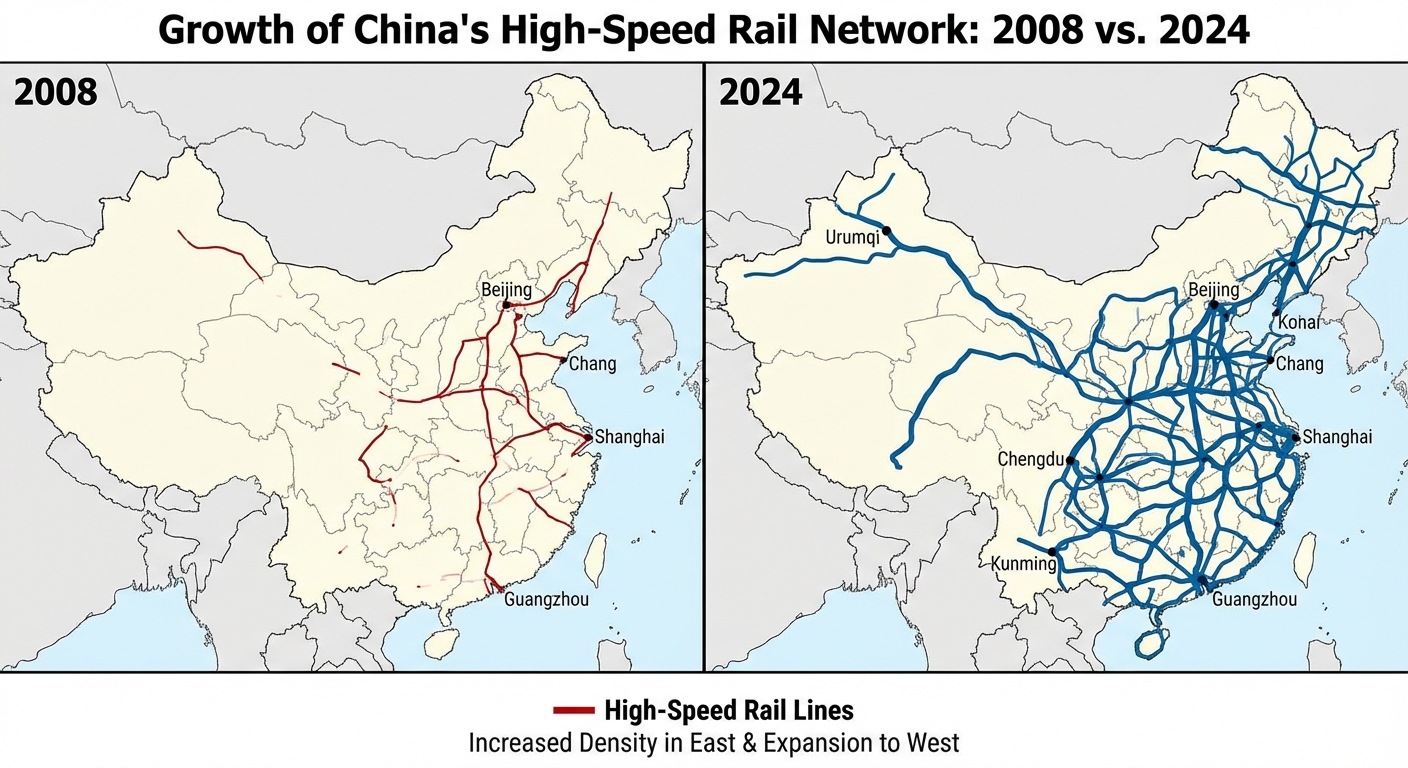
China possesses the world's most extensive high-speed rail network. It is often cited as one of modern China’s "New Four Great Inventions."
- Scale: Over 40,000 km (approx. 25,000 miles) of track, connecting major economic zones (e.g., Beijing-Tianjin-Shanghai).
- Technology: Originally based on imports (like French TGV/German ICE) but now fully domesticated (e.g., the Fuxing class trains which reach 350 km/h or 217 mph).
- Social Impact:
- Chunyun (Spring Festival Migration): Drastically reduced travel time during original holidays.
- Economic Integration: Allows people to live in cheaper satellite cities and commute to metropolises.
- Export: China exports this tech to countries like Indonesia (Jakarta-Bandung line).
Ride-Sharing & The Gig Economy
Unlike the private car ownership culture in the US, urban China relies heavily on shared mobility.
- Market Leaders: Didi Chuxing (dominates the market after acquiring Uber China).
- Safety & Regulation: Following past safety incidents, apps now feature strict facial recognition for drivers, audio recording of rides, and one-tap emergency buttons.
- Green Travel: The widespread use of Shared Bicycles (e.g., Meituan Bike, HelloBike) solves the "Last Mile Problem" (connecting subway stations to homes/offices).
The Digital Ecosystem: Mobile Life
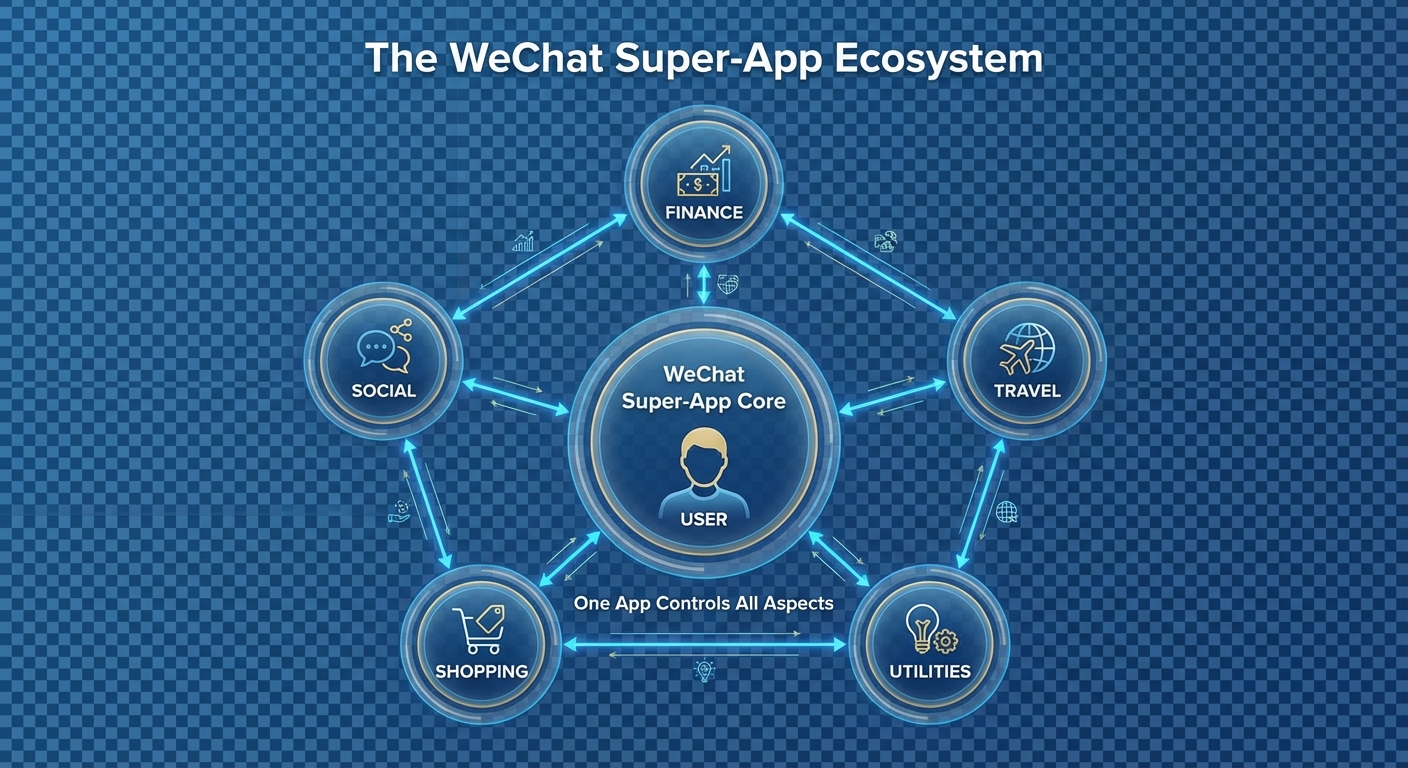
In China, the smartphone is the primary interface for daily life. The ecosystem is distinct from the West due to the prevalence of "Super-apps."
Mobile Payments & The Cashless Society
Cash is rarely used in urban centers.
- The Duopoly:
- WeChat Pay (Wēixìn Zhīfù): Embedded in the social app WeChat.
- Alipay (Zhīfùbǎo): Linked to the Alibaba e-commerce ecosystem.
- QR Codes: unlike the West's NFC (Apple Pay), China runs on QR codes. Even street buskers and small vegetable vendors use QR codes.
- Hongbao (Red Envelopes): The tradition of giving cash in red envelopes during Lunar New Year has largely gone digital, gamifying the tradition.
Social Media & Super-Apps
Western distinctions between apps (e.g., Facebook for posts, WhatsApp for chat, PayPal for money) do not apply in China.
| Feature | WeChat (Weixin) | Western Equivalent |
|---|---|---|
| Primary Function | Messaging, Voice/Video Calls | WhatsApp / iMessage |
| Social Feed | "Moments" (highly private circle) | Facebook / Instagram (private) |
| Services | Booking taxis, paying bills, ordering food | Uber + Apple Pay + DoorDash |
| Business | Official Accounts (news/blogs) | Newsletters / Twitter |
- Short Video: Douyin (the Chinese version of TikTok) and Kuaishou dominate entertainment.
- Microblogging: Weibo acts as the public square (like X/Twitter) for celebrity news and social trends.
E-Commerce & Delivery
China is the world's largest e-commerce market.
- Key Platforms:
- Taobao/Tmall: General retail.
- JD.com: Known for fast logistics/electronics.
- Pinduoduo: Group-buying discounts.
- Shopping Festivals:
- Singles' Day (Double 11): November 11th. The world's largest shopping event, far exceeding Black Friday sales.
- Livestream Commerce (Zhíbō Dàihuò): Influencers (e.g., Li Jiaqi) demo products live on screen, allowing users to buy instantly. This is a massive cultural phenomenon in China not yet fully replicated in the West.
Healthcare: Tradition Meets Innovation
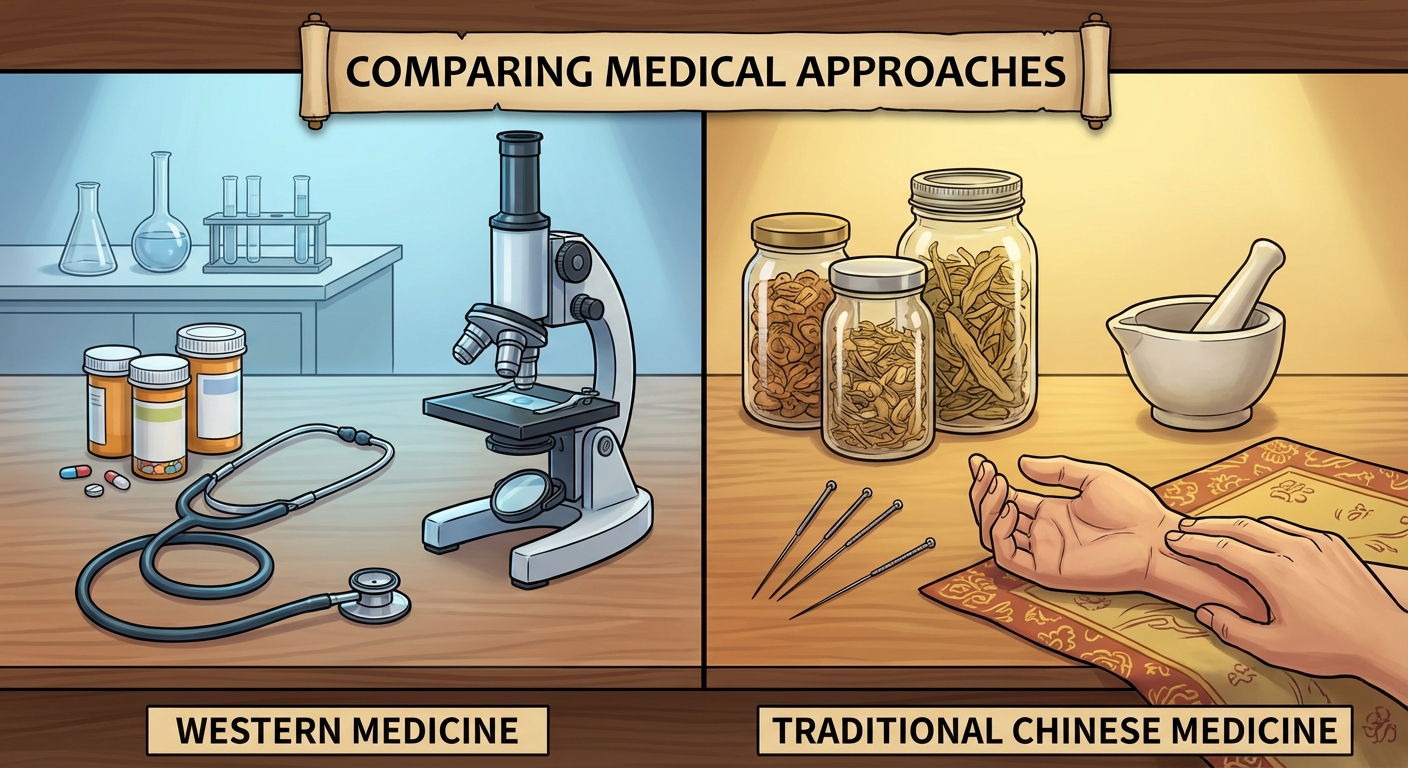
For the AP exam, you must be able to compare Traditional Chinese Medicine (TCM) with Western Medicine.
The Dual System
- Integration: Most Chinese hospitals offer both Western Medicine (Xīyī) and Traditional Chinese Medicine (Zhōngyī).
- Philosophy:
- Western: Focuses on treating the specific symptom, surgery, and lab results. seen as "fast" acting.
- TCM: Focuses on Qi (energy flow), Yin and Yang balance, and preventative care (Yǎngshēng). Seen as slower but treating the "root" cause.
Modern Healthcare Challenges & Tech Solutions
- Telemedicine: To address the shortage of doctors in rural areas, apps like Ping An Good Doctor allow remote consultations.
- AI in Medicine: AI is used to read CT scans and analyze medical data to assist overworked doctors.
- Public Health: Post-COVID, the public is accustomed to digital health tracking (Health Codes), though this sparked debates about privacy versus collective safety (see "Cultural Comparison" below).
Frontier Science: Space, AI, and Materials
The Space Program (Hángtiān)
China has moved from a participant to a leader in space exploration.
- Tiangong Space Station: Unlike the ISS (International Space Station), Tiangong is solely Chinese-operated. Completed around 2022, it hosts rotating crews of "Taikonauts."
- Moon & Mars:
- The Chang'e missions (named after the Moon Goddess) successfully brought lunar soil samples back to Earth.
- The Tianwen-1 mission successfully landed a rover on Mars in 2021.
Artificial Intelligence (AI)
- Government Priority: AI is a core part of the national development strategy.
- Applications:
- Smart Cities: Managing traffic flow and energy usage.
- Surveillance: Facial recognition is widely used for security, payments, and entry access (e.g., into residential compounds).
Green Technology
- Solar & Wind: China is the world's largest producer of solar panels.
- Electric Vehicles (EVs): Domestic brands like BYD and NIO are competing globally. The government subsidizes "New Energy Vehicles" (NEVs) to combat pollution.
Cultural Comparison: China vs. The West
This section is vital for the Free Response Questions (FRQ). You may be asked to compare the role of technology in your community vs. China.
| Concept | China | United States / West |
|---|---|---|
| Privacy | Collective Safety Priority: Citizens often accept surveillance (cameras, health codes) in exchange for high safety and convenience. | Individual Privacy Priority: High skepticism of government data collection; GDPR laws (Europe). |
| Payment | Mobile First: "Can I scan you?" (QR codes). Cash is rare; cards are barely used. | Card/Contactless: Credit cards remain king; mobile pay (Apple Pay) is secondary. |
| Shopping | Social & Livestream: Shopping is entertainment; integrated into social apps. | Search & Buy: Amazon is utilitarian; social shopping is still emerging. |
| Train vs. Plane | High-Speed Rail: Preferred for distances up to 800 miles. Direct city-center to city-center access. | Air Travel/Car: Rail is slow/expensive; cars are essential for most travel. |
Common Mistakes & Pitfalls
- Confusing WeChat with Western Apps: Do not say "WeChat is the Chinese WhatsApp." It is much more. It is WhatsApp + Facebook + PayPal + Uber + Tinder wrapped in one.
- Stereotyping Healthcare: Do not assume Chinese people only use acupuncture. Modern Chinese hospitals are extremely high-tech; TCM is usually a complementary therapy or for chronic issues.
- Outdated "Zero-Covid" mentions: While historically important, do not present strict lockdowns as current reality. Focus instead on the lasting digital infrastructure (Health Kit apps) that emerged from the pandemic.
- Assuming Universal Access (Digital Divide): While cities are high-tech, remember that the "Digital Divide" exists. Elderly people and rural populations sometimes struggle to navigate a society that requires a smartphone for everything (banking, travel, eating).
Useful Vocabulary / Mnemonics
- Four New Inventions (Xīn Sì Dà Fāmíng): High-speed Rail, Alipay/Mobile Pay, Shared Bikes, Online Shopping.
- Dītóu Zú (低头族): Literally "Head-down tribe" — people addicted to their phones, always looking down.
- Zhíbō (直播): Livestreaming.
- Rénliǎn Shíbié (人脸识别): Facial recognition.