Unit 5: Factors Influencing Quality of Life in Japan
Unit 5: Factors Influencing Quality of Life in Japan
This unit explores how various aspects of daily life—ranging from physical environment and infrastructure to social pressures and cultural values—shape the well-being of people living in Japan. For the AP Exam, focus on the trade-offs between Japan's safety/convenience and its rigid social expectations.
1. Housing and Living Environments (住環境 - Jū-kankyo)
Definitions & Cultural Context
- Quality of Life (QoL): In the Japanese context, high QoL is often associated with safety, cleanliness, and convenience, but negatively impacted by lack of space and work stress.
- LDK (Living, Dining, Kitchen): A real estate term describing apartment layouts (e.g., "2LDK" means 2 bedrooms plus a living/dining/kitchen area).
Urban vs. Rural Living
| Feature | Urban (Tokyo, Osaka) | Rural (Inaka) |
|---|---|---|
| Housing Type | High-rise apartments (Manshon) or small detached houses. | Large detached houses (Ikkenya) with gardens. |
| Cost | Extremely high rent/land prices. | Affordable; empty houses (Akiya) are becoming common. |
| Space | Compact usage of space (multi-purpose rooms). | Spacious, often multi-generational. |
| Commute | Reliance on crowded trains (rush hour stress). | Reliance on cars; fewer public transit options. |
Key Housing Features
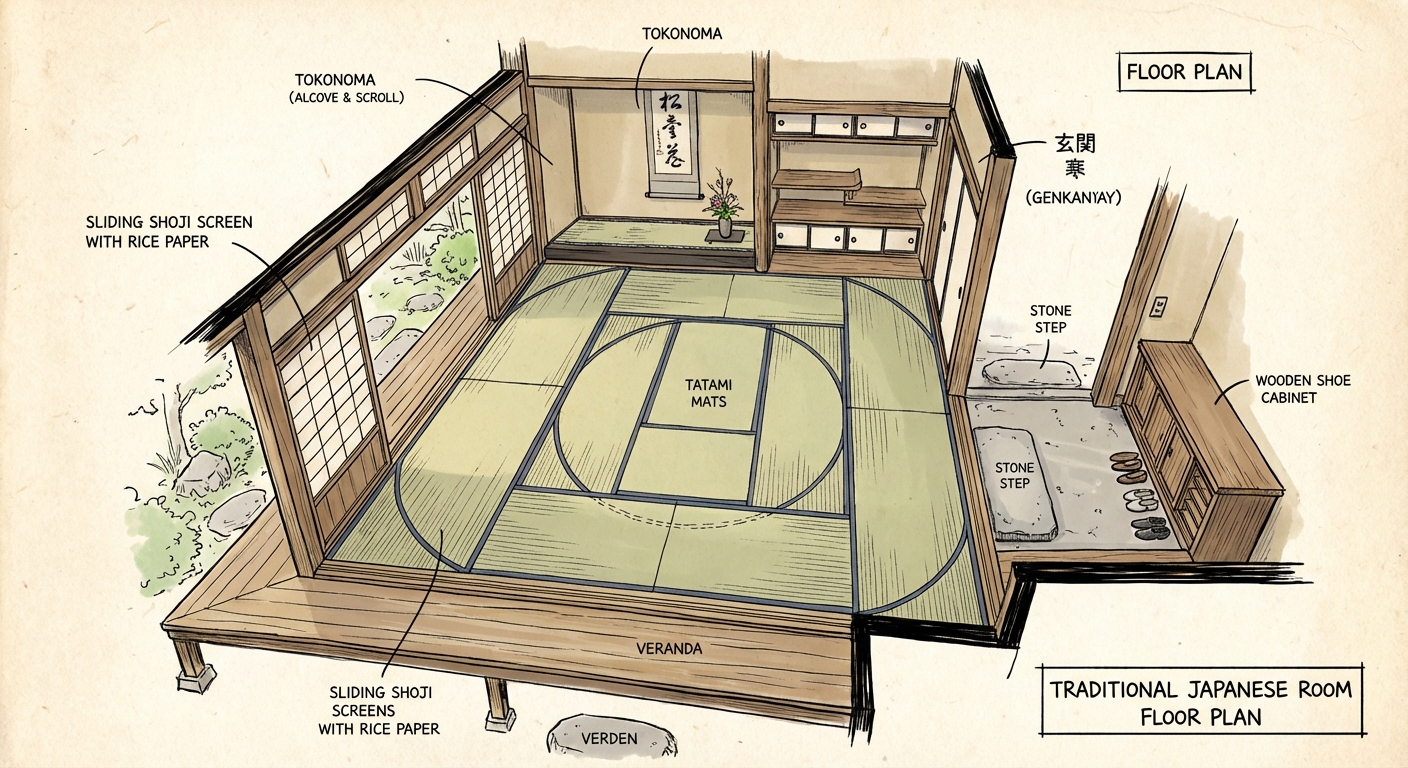
- Genkan (玄関): The sunken entryway where shoes must be removed. This separates the "unclean" outside world from the "clean" inside sanctuary.
- Tatami (畳): Straw slightly spongy flooring. Room size is measured in mats (jo).
- Cultural Note: You must not step on fabric borders of tatami (sign of disrespect) and never wear slippers on tatami.
- Modern Efficiency: High-tech toilets (Washlet), deep soaking tubs (Ofuro) with reheating functions (Oidaki), and efficient waste separation systems.
2. Education and Career Pressures (教育と仕事)
While Japan's education and workforce systems produce high stability and safety, they are often cited as major sources of stress reducing QoL.
The Education System (教育制度)
- Juken Jigoku (受験地獄 - Examination Hell): The intense period of studying for high school and university entrance exams.
- Juku (塾 - Cram Schools): Supplemental private schools attended evening and weekends. While they boost academic ability, they reduce leisure time and sleep for students.
- Group Identity:
- Randoseru: Uniform backpacks for elementary students promote equality.
- Cleaning Time (Souji): Students clean their own classrooms, cultivating responsibility and respect for shared spaces.
Work Culture and Challenges
- Shūshin Koyō (終身雇用 - Lifetime Employment): The traditional model where employees stay with one company until retirement. This provides security but low flexibility. (Note: This is slowly changing in modern Japan).
- Karōshi (過労死): Death caused by overwork or job-related exhaustion.
- Work-Life Balance:
- Long hours often include "service overtime" (unpaid).
- Nomikai (飲み会): After-work drinking parties with colleagues. While intended to build harmony (Wa), many younger workers view this as an obligation that eats into personal time.
Common Mistake:
Student Myth: "Japanese people naturally love working long hours."
Reality: Long hours are often a result of social pressure and the hesitation to leave before the boss (hierarchical respect), rather than a personal desire to work late.
3. Societal Challenges: The Demographic Crisis
This is the single most critical topic for "Global Challenges" in the AP curriculum regarding Japan.
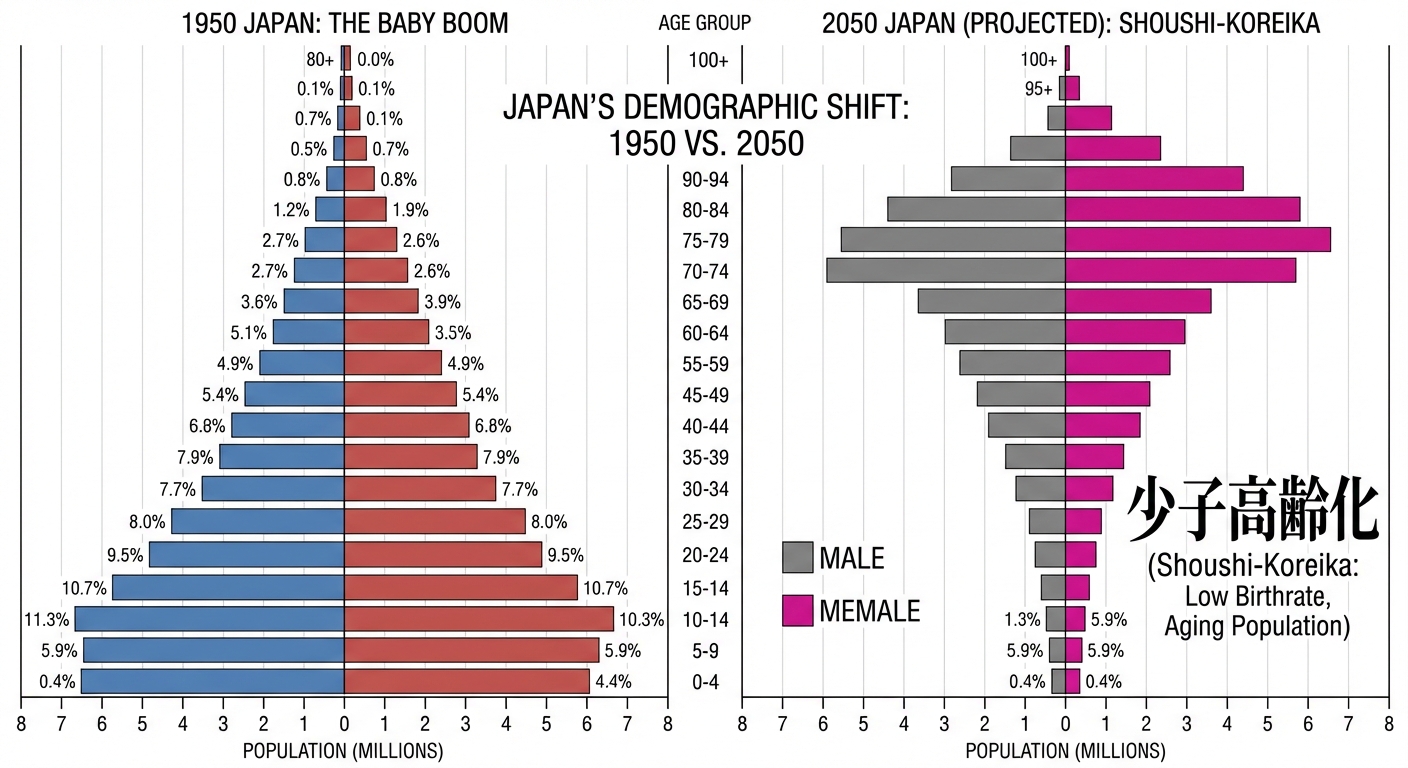
Shōshi-Kōreika (少子高齢化)
This term combines "declining birthrate" (shōshika) and "aging population" (kōreika).
- The Statistics: Japan has one of the highest life expectancies but one of the lowest birth rates globally.
- Impact on QoL:
- Shrinking Workforce: Labor shortages in service and construction.
- Pension Strain: Fewer young workers to support the elderly.
- Caregiving (Kaigo): Increased pressure on families to care for aging parents.
Proposed Solutions
- Womenomics: Government policies to encourage mothers to return to the workforce (requires better daycare support).
- Technology: Nursing care robots (Kaigo robotto) to assist the elderly.
- Immigration: Gradual opening to foreign workers (Ginou Jisshusei - Technical Intern Trainees).
4. Infrastructure and Convenience (便利さ)
Japan’s high QoL is heavily supported by its world-class infrastructure, which minimizes daily friction.
Public Transportation
- Punctuality (Teijichaku): Trains run to the second. Delay certificates (Chien shōmeisho) are issued if a train is even 5 minutes late.
- Shinkansen (Bullet Train): Connects the country, making domestic travel fast and easy.
- Etiquette: Silence on trains is a strict norm (messages meant to be texted, not spoken).
Convenience Stores (Konbini)
More than just shops, they are essential life infrastructure open 24/7.
- Services: Pay utility bills, withdraw cash (ATM), send/receive packages (Takkyubin), buy fresh food (Bento), purchase concert tickets.
- Safety: They serve as