Mastering Unit 9: Strategic Argumentation & Sophistication
Unit 9: Developing Complex Arguments
Overview: The "Sophistication" Unit
In AP English Language and Composition, Unit 9 is the culmination of the course. While previous units focused on individual skills (rhetorical analysis, synthesis, basic argumentation), Unit 9 is about nuance, style, and sophistication.
The goal is no longer just to "win" an argument, but to explore the complexity of an issue, acknowledge valid opposing views, and situate your perspective within a broader conversation. This unit directly addresses the Sophistication Point (Row C) on the AP Exam rubrics.
I. Analysis of Complex Arguments
Before writing complex arguments, you must be able to deconstruct them.
A. Identifying Key Elements
When analyzing high-level texts (non-fiction, essays, speeches), look for:
- The Nuanced Thesis: A claim that is not binary (yes/no) but conditional (e.g., "While X is true, Y is more critical because…").
- The Line of Reasoning: The logical progression of ideas/claims that leads to the conclusion.
- Strategic Evidence: Evidence selected not just for shock value, but for specific relevance to the audience's values.
B. Analyzing Multiple Perspectives
Complex arguments rarely exist in a vacuum. Authors engage in a conversation with other viewpoints.
- Synthesis: Combining information from multiple sources to develop a new, original position.
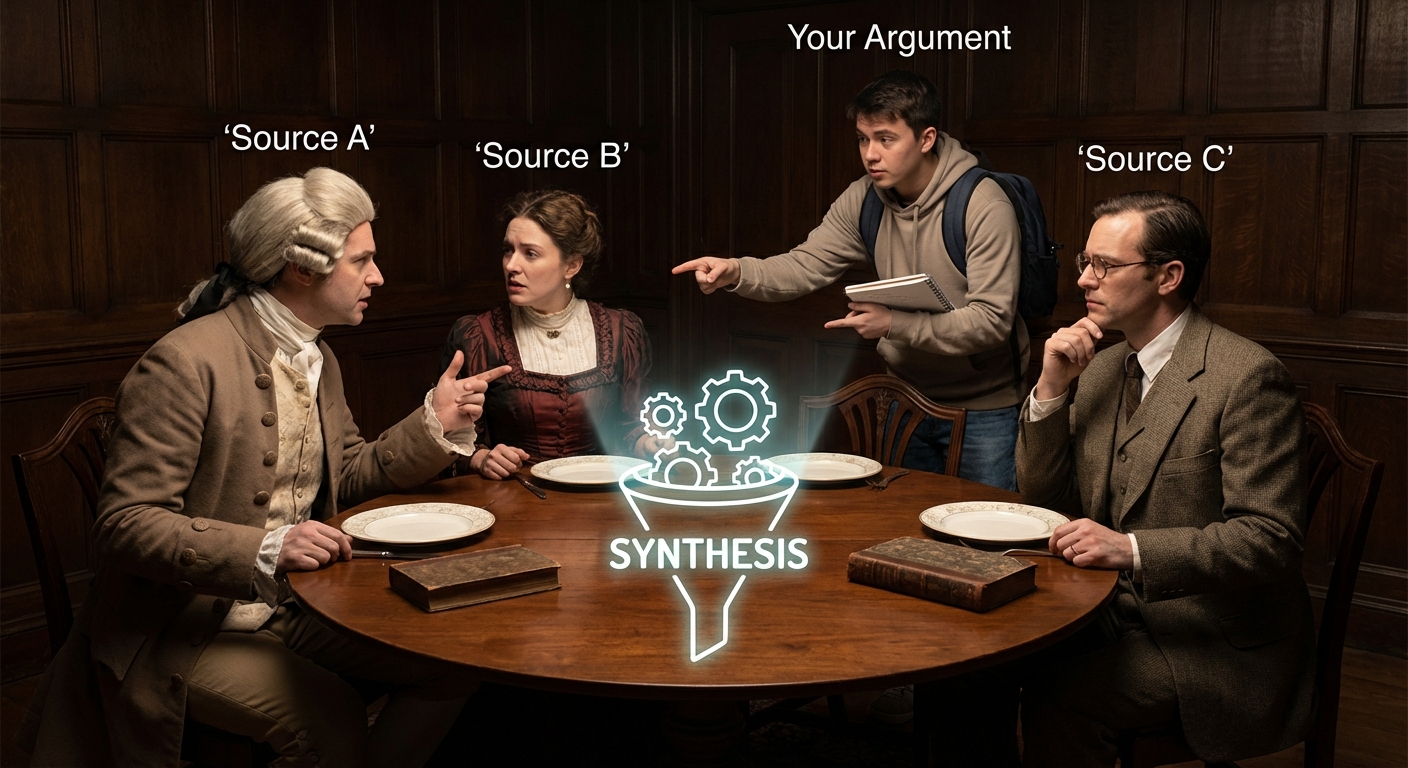
- Conversation of Sources: Imagine the sources are people at a dinner table. How do they agree, disagree, or qualify one another? Your job is to moderate this conversation.
C. Tone and Irony
A major focus of Unit 9 multiple-choice questions is the detection of Irony and shifts in Tone.
- Verbal Irony: Stating the opposite of what is meant (often sarcasm).
- Situational Irony: When the outcome is contrary to what was expected.
- Why it matters: Authors use irony to critique societal norms without being explicitly aggressive. Failing to detect irony leads to misinterpreting the author's entire argument.
II. Structuring a Complex Argument
Moving beyond the standard 5-paragraph essay is essential for high-scoring responses. You must choose a structure that fits your specific purpose.
A. The Toulmin Model
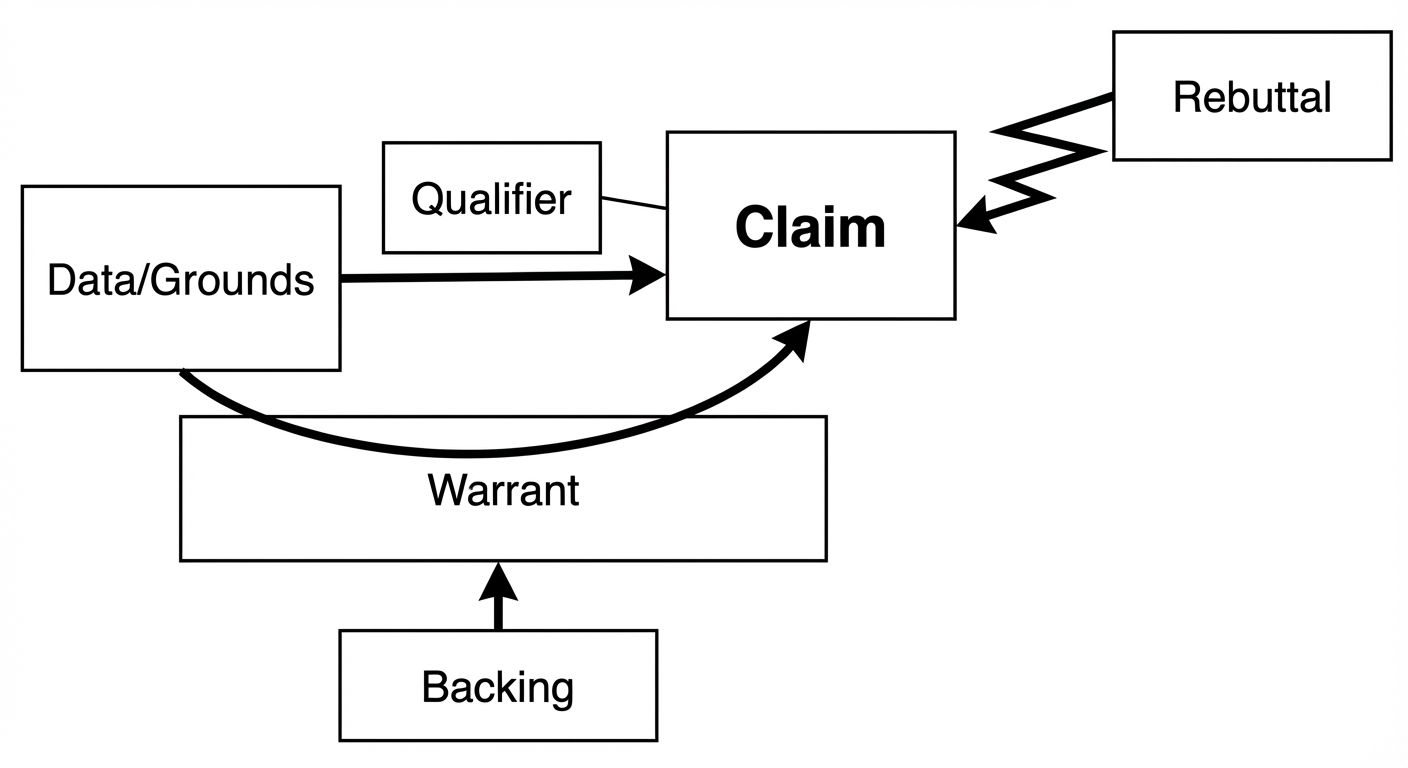
Use this model when your audience is logical and skeptical. It breaks arguments down into six parts, making them difficult to attack.
- Claim: The main argument.
- Data (Grounds): Evidence supporting the claim.
- Warrant: The underlying assumption that connects the Data to the Claim. (e.g., Claim: "Ban smoking." Data: "Smoking causes cancer." Warrant: "The government should prevent citizens from getting cancer.")
- Backing: Support for the Warrant (proving the assumption is valid).
- Qualifier: Limits the scope of the claim (e.g., "probably," "in most cases").
- Rebuttal: Addressing potential objections.
B. The Rogerian Model
Use this model when discussing highly controversial or emotional topics. The goal is consensus, not conquest.
- Introduction: State the problem, not your position.
- Opposing View: neutrally describe the counter-argument (validate it).
- Context for Opposing View: Explain when and where the opposition might be right.
- Your Position: State your claim.
- Context for Your Position: Explain when and where your position is valid.
- Benefits: Explain how your solution benefits the opposition (find common ground).
C. Classical Oration
A traditional structure effective for speeches and formal essays.
- Exordium: Hook and context.
- Narratio: Background and facts.
- Partitio: The thesis/claim.
- Confirmatio: Positive arguments/proof.
- Refutatio: Refuting the opposition.
- Peroratio: Conclusion and emotional appeal.
III. Nuance: Qualification and Counterarguments
To achieve sophistication, you must abandon absolutism. The real world is rarely black and white.
A. Qualification
Qualification means limiting the scope of your argument to make it more precise and defensible. Avoid words like always, never, everyone, impossible. Instead, use qualifiers.
| Absolutes (Avoid) | Qualifiers (Use) |
|---|---|
| Always | Frequently / Often |
| Never | Rarely / Seldom |
| Everyone | Many / The majority |
| Is | Tends to be / Can be |
| Proven | Suggested / Indicated |
B. Concession vs. Refutation
Handling the opposition requires distinct strategies. You can mix these in a single paragraph.
Concession: Admitting that a specific part of the opposing argument is true or valid.
- Common phrase: "Admittedly…" or "It is true that…"
- Purpose: Builds ethos (credibility) by showing you are fair-minded.
Refutation: Proving an opposing argument is false, illogical, or irrelevant.
- Common phrase: "However…" or "Nevertheless…"
- Purpose: Strengthens logos (logic) by dismantling the opposition.
Example of a Counterargument Sandwich:
"[Concession] Admittedly, standardized testing provides a uniform metric for student comparison. [Refutation] However, this metric fails to account for socioeconomic disparities that skew results, rendering the comparison fundamentally flawed."
IV. Strategic Evidence Selection
Quality over quantity. Unit 9 emphasizes how you use evidence, not just that you have it.
A. Types of Evidence (REGO)
Identify the best type of evidence for your specific audience.
- R - Reading/Research: Historical facts, current events, studies.
- E - Experience: Personal anecdotes (use sparingly, connect to universal themes).
- G - General Knowledge: Cultural observations, pop culture, widely known truths.
- O - Observation: What you see in the world around you.
B. Synthesizing Evidence
Don't just list examples. Explain how Example A relates to Example B.
- Do they contradict? (Showing complexity).
- Do they corroborate? (Showing a pattern).
- Do they show cause and effect?
Code Phrase for Reasoning:
"This evidence suggests precisely that [Claim], because [Warrant/Reasoning]."
V. Style and Sophistication
The way you speak is as important as what you say.
A. Syntax as Argument
Varying sentence structure controls pacing and emphasis.
- Periodic Sentences: The main clause comes at the very end. (Builds suspense).
- Example: "After years of struggle, through rain and snow, despite the fatigue, he finally won."
- Parallelism: Using similar grammatical structures for related ideas. (Creates rhythm and balance).
- Example: "We shall pay any price, bear any burden, meet any hardship…"
- Short Sentences: Use a sudden short sentence 5 words) after a long one to drive a point home.
B. Precision of Language
Use exact vocabulary.
- Instead of "bad," use detrimental, corrosive, ineffective.
- Instead of "good," use beneficial, advantageous, viable.
VI. Common Mistakes & Summary
Common Pitfalls in Unit 9
- ** The Straw Man Fallacy:** Oversimplifying the opposing view to make it easier to attack. (e.g., "Opponents hate freedom."). This kills your sophistication score.
- Leaving Evidence "Orphaned": Dropping a quote or fact without explaining how it supports the thesis.
- The "Wishy-Washy" Thesis: Qualifying too much until you have no opinion. (e.g., "There are good points on both sides."). You still need a stance!
- Tone Slip: Becoming too angry, sarcastic, or informal. Keep it academic and reasonable.
Final Checklist for Complex Arguments
- [ ] Does my thesis contain a tension or qualification (e.g., "Although X, Y is true because Z")?
- [ ] Is the line of reasoning easy to follow from paragraph to paragraph?
- [ ] Did I concede a point to the opposition before refuting them?
- [ ] did I use specific, precise vocabulary rather than generalizations?