Comprehensive Study Guide: Unit 1 - Families in Different Societies
1. Family Structure (La Estructura Familiar)
Defining the Family Unit
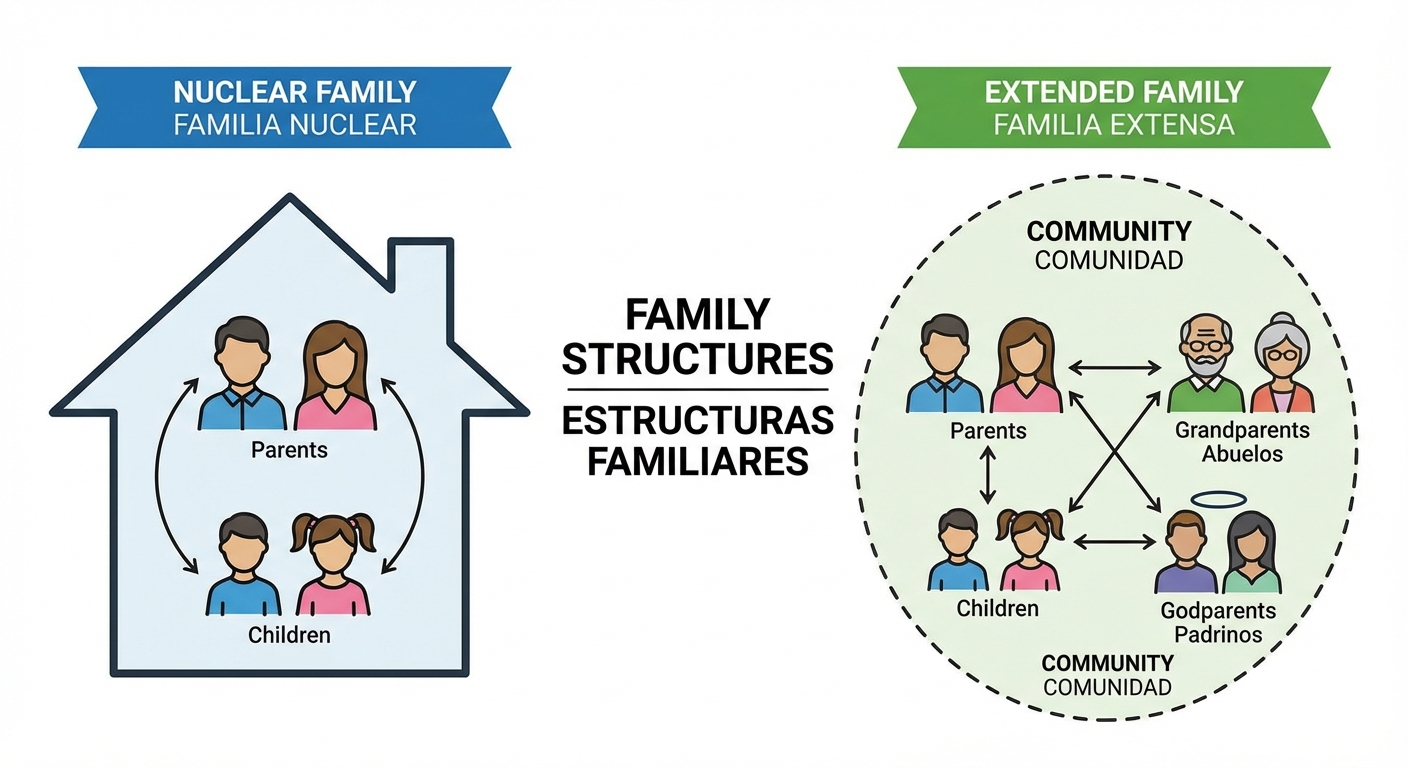
The concept of family in Spanish-speaking cultures often extends beyond the nuclear unit found in many Anglophone countries. While trends are modernizing, the foundational definition remains inclusive.
- La Familia Nuclear (Nuclear Family): Consists of parents and children. Prevalent in urban centers (e.g., Madrid, Buenos Aires, Mexico City).
- La Familia Extensa (Extended Family): Includes abuelos (grandparents), tíos (uncles/aunts), primos (cousins), and often padrinos (godparents). In many rural areas and Latin American countries, the extended family functions as a single economic and social unit.
Key Trends & Changes
Declining Birth Rates (La Tasa de Natalidad):
- Spain: Has one of the lowest birth rates in Europe. Many couples delay having children until their 30s due to economic instability and high youth unemployment.
- Latin America: While still higher than Europe, birth rates are dropping in developing nations (like Chile and Colombia) as women prioritize education and careers.
Diverse Households:
- Single-Parent Homes (Familias Monoparentales): Increasing due to divorce and social acceptance.
- Same-Sex Marriage: Legal in Spain (2005), Argentina, Colombia, Mexico (some states), and others. This challenges traditional definitions but is increasingly accepted legally and socially.
- The "Boomerang" Generation: In Spain, it is common for children to live with parents into their 30s due to the high cost of housing and paro (unemployment).
Vocabulary Alert: False Cognates & Terms
| Spanish Term | English Definition | Note |
|---|---|---|
| Los Parientes | Relatives | NOT "parents" (which is los padres). |
| Hermanastros | Step-siblings | |
| Cuñado/a | Brother-in-law / Sister-in-law | |
| Suegros | In-laws (Parents) | Very influential in family dynamics. |
| Yerno / Nuera | Son-in-law / Daughter-in-law |
2. Social Values and Customs (Los Valores y Costumbres)
Core Cultural Values
1. El Familismo
The cultural belief that loyalty to the family takes precedence over individual needs.
- Expressed through: Regular Sunday gatherings, caring for elderly parents at home rather than nursing homes (residencias de ancianos), and pooling financial resources.
2. El Compadrazgo (Co-parenthood)
A crucial institution in Latin America originating from Catholic baptism.
- Los Padrinos: Godparents are chosen not just for religious guidance but as a support system.
- Relationship: The bond between the parents and the godparents (compadres) is often as strong as blood ties. It serves as a social safety net.
3. Respeto & La Tercera Edad
- Elderly Care: Historically, putting grandparents in a nursing home is frowned upon, though this is changing in urban Spain due to work demands. Elders are viewed as holders of wisdom (sabiduría).
Gender Roles: Machismo vs. Marianismo vs. Feminism
- Machismo: Validating male dominance, strength, and the role of "provider." (Declining but present).
- Marianismo: The traditional view of women as self-sacrificing, nurturing, and morally superior (modeled after the Virgin Mary).
- Modern Shift: Women in Spain and Latin America now hold high political offices (e.g., Presidents in Chile, Mexico, Argentina). The movement "Ni Una Menos" (Latin America) fights against gender violence.
Social Traditions
- La Sobremesa: The custom of lingering at the table after a meal to chat, drink coffee, and socialize. This can last for hours and is critical for family bonding. It rejects the "eat and run" mentality.
- Greetings:
- Spain: Two kisses (dos besos), right cheek then left.
- Latin America: Usually one kiss (un beso) on the cheek for women/mixed company; handshakes or hugs (abrazos) for men.

3. Challenges Facing Families (Los Desafíos)
Economic Challenges
1. Migration and "Las Remesas"
- Context: In many Latin American countries (Mexico, El Salvador, Guatemala), one or both parents may migrate to the US or Spain for work.
- Remittances (Remesas): Money sent back home. While it provides financial survival, it creates the challenge of transnational families where children are raised by grandparents.
2. The Economic Crisis & "Los Ninis"
- Phenomenon: Young adults who Ni estudian Ni trabajan (Neither study nor work) due to lack of opportunity.
- Impact: Delays marriage and leaving the parental home (emancipación).
Social & Environmental Challenges
Education:
- Access: In rural Latin America (e.g., parts of Peru, Bolivia), children may leave school early to work on family farms.
- Spain: High dropout rates in the past, though improving. The debate often centers on Public vs. Private (Catholic) education.
Technology:
- The Digital Divide (La brecha tecnológica): Older generations often struggle to connect with younger, tech-savvy family members. However, WhatsApp groups are now the primary way extended Spanish families stay in constant contact.
4. Global Comparison: AP Exam Focus
For the AP Cultural Comparison section, you must compare a Spanish-speaking region to your own community.
| Theme | Spanish-Speaking World (General) | Potential Comparison (USA/Your Community) |
|---|---|---|
| Independence | Children often live at home until marriage or late 20s/30s. | Children usually leave for college or work at 18. |
| Nursing Homes | Culturally resisted; families rely on familismo. (Changing in cities). | Common and socially accepted solution for elder care. |
| Food Culture | Sobremesa reinforces family time; main meal often at mid-day (Spain). | Meals often fast/on-the-go; dinner is the main meal. |
| Godparents | Compadrazgo creates a lifelong, active responsibility. | Often symbolic or limited to religious ceremonies. |
5. Common Mistakes & Pitfalls
- Stereotyping Religion: Do not assume everyone is a devout Catholic. Spain is increasingly secular (laico), and Evangelical Christianity is growing rapidly in Latin America. Use phrases like "Tradicionalmente, la religión católica…" (Traditionally, the Catholic religion…).
- Geography Logic: Remember that seasons in the Southern Hemisphere (Argentina, Chile) are opposite to the US and Spain. Christmas families dinners there are in the summer.
- Language Register: When writing an email (interpersonal writing) to a family member, use Tú (informal). If writing to an elder or professional, use Usted (formal).
- Confusing Terms:
- Soportar = To tolerate/put up with. (Do not use for "supporting a family").
- Mantener / Apoyar = To support (financially / emotionally).
