Sacred Paths and Imperial Splendor: Masterpieces of South, East, and Southeast Asia
Unit 8: South, East, and Southeast Asia, 300 BCE–1980 CE
Cultural and Religious Contexts
This unit covers a vast geographical area and time period, unified by the spread of major religious traditions and trade networks (like the Silk Road). Understanding the underlying belief systems is synonymous with understanding the art.
Key Religious Frameworks
- Buddhism
- Origin: India (Siddhartha Gautama). Focuses on ending suffering (samsara) through the Four Noble Truths and Eightfold Path.
- Artistic Impact: Stupas (relic mounds), statues of Buddha (ushnisha, urna, mudras), and rock-cut caves.
- Difference: Theravada (focus on individual monkhood) vs. Mahayana (focus on Bodhisattvas helping others).
- Hinduism
- Origin: India. Polytheistic (Brahma, Vishnu, Shiva). Believes in Karma, Dharma, and Reincarnation.
- Artistic Impact: Temple architecture symbolizing mountains (Mt. Meru), dynamic bronze sculptures, narrative reliefs.
- Daoism (Taoism)
- Origin: China (Laozi). Emphasizes harmony with nature (The Way/Dao), yin and yang balance.
- Artistic Impact: Landscape paintings (nature is vast, humans are small), incorporation of empty space.
- Confucianism
- Origin: China (Confucius). Focuses on social order, filial piety (respect for elders/ancestors), and the Five Relationships.
- Artistic Impact: Ancestor portraits, jade rituals, bureaucratic order in architecture (Forbidden City).
- Shintoism
- Origin: Japan. Indigenous spirituality focusing on kami (spirits in nature) and purity.
- Artistic Impact: Natural materials in architecture (wood, thatch), sacred spaces marked by Torii gates.
South and Central Asian Art
The art of this region is dominated by the visual expressions of Buddhism and Hinduism, often utilizing the Stupa and the Temple as cosmic diagrams.
➼ Great Stupa at Sanchi
- Location/Date: Madhya Pradesh, India. Buddhist; Maurya, late Sunga Dynasty. c. 300 BCE – 100 CE.
- Material: Stone masonry, sandstone on dome.
Form & Function
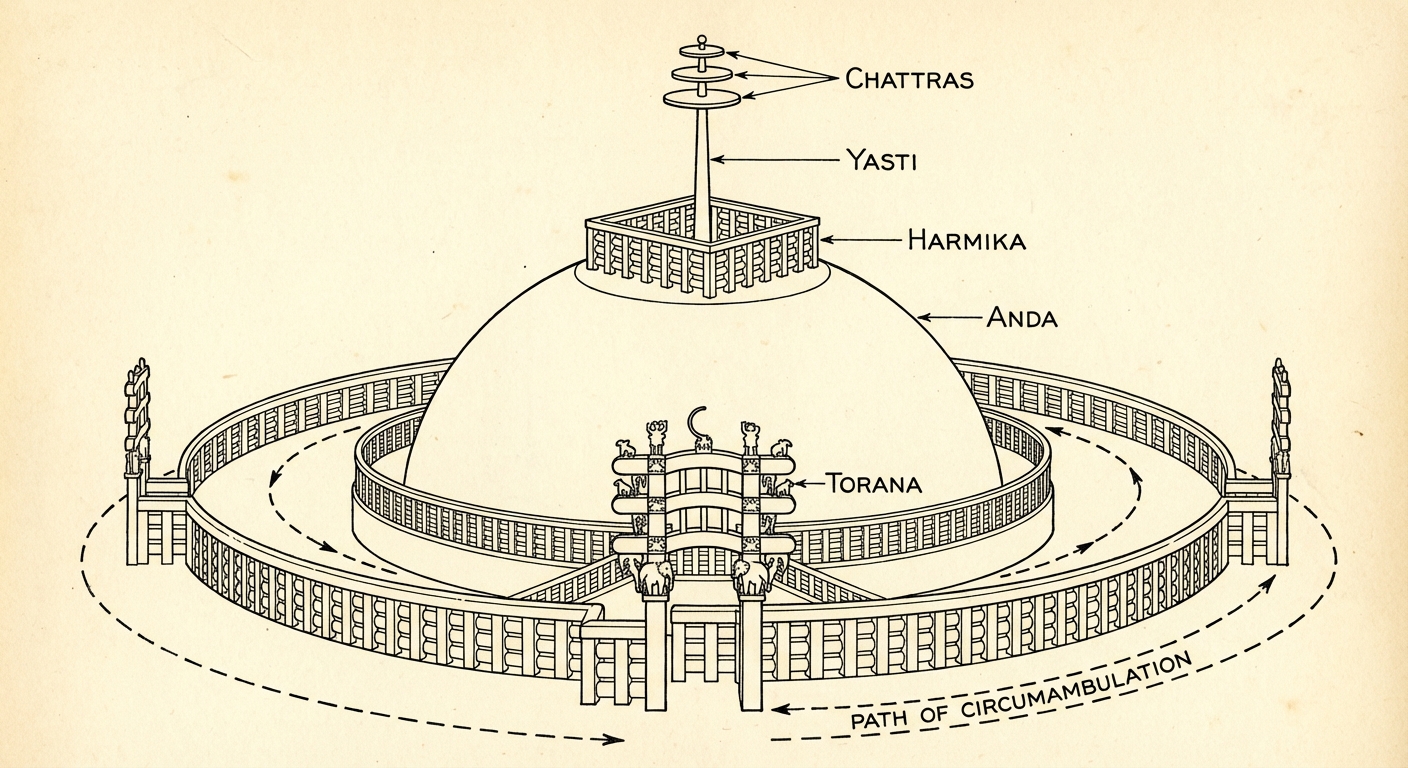
- The Structure: A sepulchral monument (tomb-like) containing relics of the Buddha. It is a solid mound, not a building to enter.
- Circumambulation: Worshippers walk clockwise around the stupa (following the sun’s path), mediating on the cycle of life/rebirth.
- Architectural Symbolism:
- Anda (Dome): The dome of heaven.
- Yasti (Mast): Axis mundi, connecting earth and heaven.
- Chattras (Umbrellas): Signify royalty and protection; represent the "Three Jewels" of Buddhism (Buddha, Law, Monastic Order).
- Harmika: Stone fence atop the dome, enclosing the sacred space.
The Toranas (Gateways)
- Four gateways at cardinal points. While the stupa is abstract, the toranas are covered in high-relief narratives.
- Aniconic Representation: The Buddha is never shown in human form here; represented by symbols (footprints, empty throne, Bodhi tree).
- Yakshi Figures: Pre-Buddhist fertility dieties integrated into the architecture (holding onto mango trees), showing the assimilation of local beliefs.
➼ Buddha (Bamiyan)
- Location/Date: Bamiyan, Afghanistan. Gandharan. c. 400–800 CE (Destroyed 2001).
- Context: Located on the Silk Road, a hub of trade and religious exchange. Bamiyan was a stopping point for merchants and missionaries.
- Form: Styles blend Hellenistic (Greek robes, wavy hair—legacy of Alexander the Great) with Indian iconography. Two colossal high-relief statues carved into the cliff (175 ft and 115 ft).
- Circumambulation: Pilgrims could walk within the cliff galleries around the feet and heads of the statues.
- Iconoclasm: In 2001, the Taliban destroyed them, viewing them as idols.
➼ Shiva as Lord of Dance (Nataraja)
- Location/Date: Hindu; India (Tamil Nadu), Chola Dynasty. c. 11th Century CE. Cast Bronze.
- Function: A processional statue. Carried in parades, dressed in silk, and adorned with flowers. It is the literal embodiment of the deity (Darshan: seeing the god and being seen by the god).
Iconography
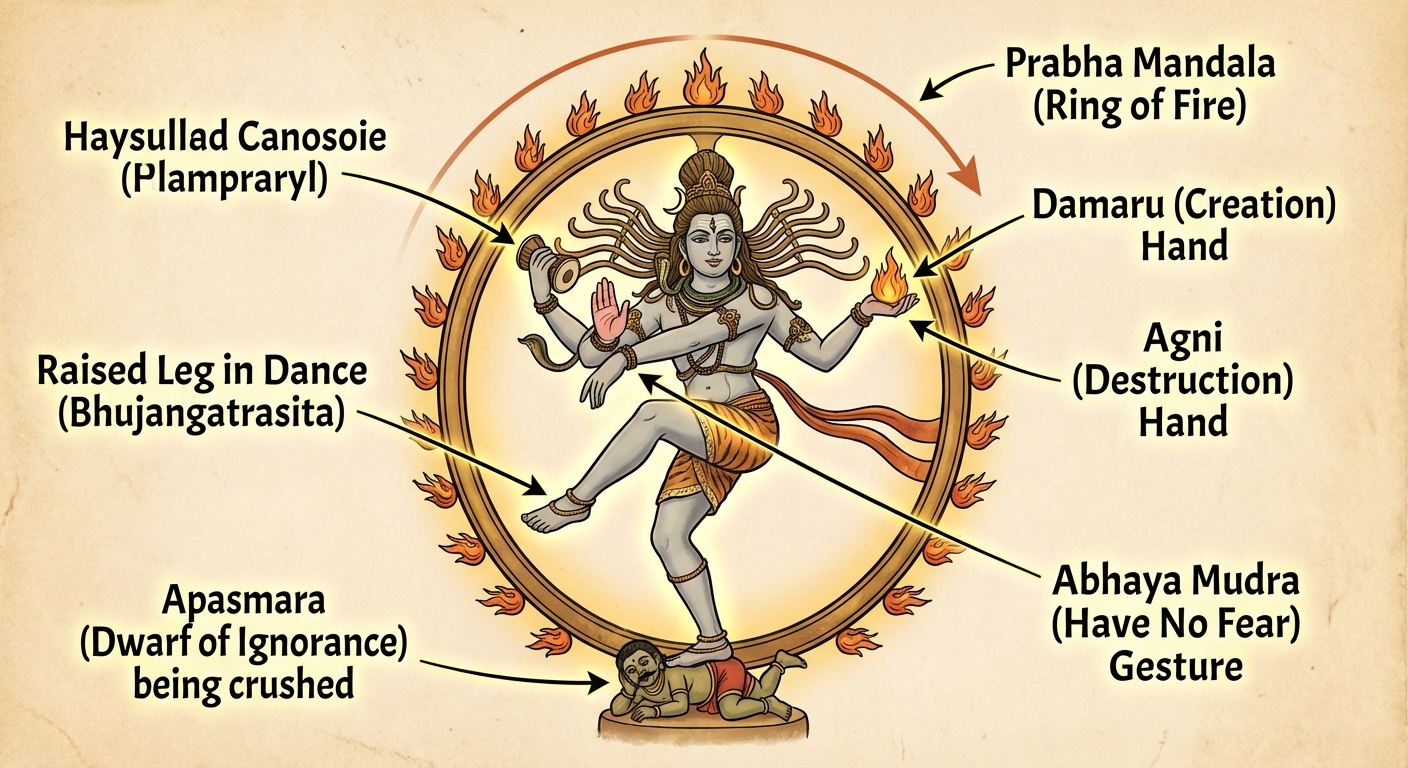
- Dance (Tandava): The cosmic dance creating and destroying the universe.
- Fire Ring (Prabha Mandala): The borders of the cosmos.
- Hands:
- Upper Right: Damaru (drum) – the sound of creation.
- Upper Left: Agni (fire) – destruction.
- Lower Right: Abhaya Mudra – "Be not afraid."
- Feet: One foot suppresses the dwarf (Apasmara), representing ignorance.
➼ Lakshmana Temple
- Location/Date: Khajuraho, India. Chandella Dynasty. c. 930–950 CE. Sandstone.
- Form: Nagara style architecture. Looks like a mountain range.
- Shikara: The tallest tower, located directly over the main shrine.
- Garbha Griha: The "Womb Chamber"—a small, dark, windowless inner sanctum for individual worship of the deity (Vishnu).
- Sculpture: Famous for mithuna sculptures (erotic couples). These represent divine union, fertility, and protection. The exterior is covered in idealized human figures.
- Axis Mundi: The temple connects the earth to the heavens.
➼ Jahangir Preferring a Sufi Shaikh to Kings
- Artist: Bichitr. c. 1620 CE. Watercolor, gold, and ink on paper.
- Context: Mughal Empire (Islamic rulers in India). Known for "Miniature Paintings" meant for albums (muraqqa).
- Content: Emperor Jahangir sits on an hourglass throne (time is running out). He hands a book to a Sufi Shaikh (religious scholar), ignoring the kings below him.
- Hierarchy: Sufi Shaikh > Ottoman Sultan > King James I of England > The Artist (Bichitr).
- Cross-Culturalism: Includes Renaissance carpet, cherubs copied from European art, and James I (based on a diplomatic gift).
- Symbolism: The sun and moon halo indicates Jahangir is the center of the universe. The quote implies he prefers spiritual matters over worldly power (propaganda).
Southeast Asian Art
Influenced heavily by Indian trade, this region developed massive temple complexes that merged local ancestor worship with Hindu/Buddhist cosmology.
➼ Borobudur Temple
- Location/Date: Central Java, Indonesia. Sailendra Dynasty. c. 750–842 CE. Volcanic stone.
- Form: A massive 3D mandala (cosmic diagram). A pyramid with 9 distinct levels.
- Base: World of Desire (Kamadhatu). Reliefs show karma/sin (often covered up).
- Middle Terraces (Square): World of Forms (Rupadhatu). Reliefs show the Buddha’s life and dignity.
- Top Terraces (Circular): World of Formlessness (Arupadhatu). Openwork stupas with hidden Buddhas; no reliefs, just geometry and sky.
- Function: A physical path to enlightenment. As the pilgrim climbs, the architecture shifts from complex/narrative to simple/abstract.
➼ Angkor Wat
- Location/Date: Cambodia. Angkor Dynasty. c. 800–1400 CE. Sandstone.
- Patron: King Suryavarman II.
- Function: Originally a Hindu temple dedicated to Vishnu; later converted to a Buddhist temple. Also served as a mausoleum for the King.
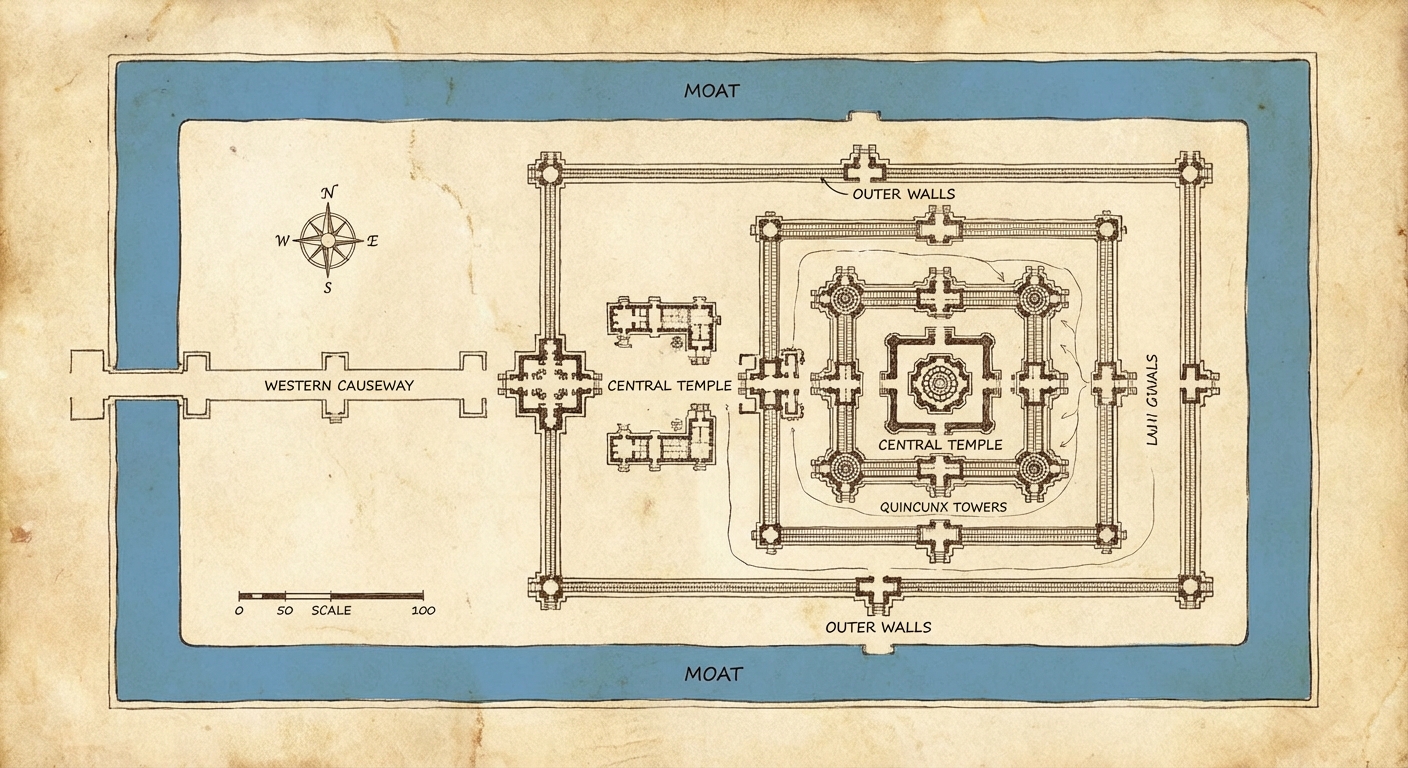
- Plan: Represents Mt. Meru (home of the gods). Surrounded by a moat (the cosmic ocean).
- Carving: The Churning of the Ocean of Milk. A creation myth where gods and demons tug-of-war with a serpent to release the elixir of immortality. It symbolizes the king's power to ensure cosmic order.
Chinese Art
Chinese art spans millennia, focusing on the authority of the state, funerary grandiosity, and the philosophical contemplation of nature.
➼ Terra Cotta Warriors
- Location/Date: Mausoleum of the First Qin Emperor (Qin Shi Huang). c. 221–209 BCE.
- Context: The Emperor united China. He was obsessed with immortality and military power (Legalism).
- Form: 8,000+ life-size soldiers, horses, and chariots. Originally painted.
- Technique: Modular production. Assembly-line creation using molds for body parts, but faces were hand-finished to be unique (individualized).
➼ Funeral Banner of Lady Dai (Xin Zhui)
- Location/Date: Han Dynasty. c. 180 BCE. Painted Silk.
- Context: Found in a perfectly preserved tomb. The banner draped the inner coffin.
- Composition: T-shaped, divided into 3 realms:
- Heaven (Top): Moon (toad/rabbit), Sun (raven), celestial dragons.
- Earth (Middle): Lady Dai depicted waiting to ascend; mourning scenes.
- Underworld (Bottom): Strange creatures, fish, preserving the body.
- Significance: Earliest known portrait in Chinese painting.
➼ Longmen Caves
- Location/Date: Luoyang, China. Tang Dynasty. 493–1127 CE. Limestone.
- Patron: Empress Wu Zetian (the only female Emperor of China).
- The Vairocana Buddha: The colossal central figure (Universal Buddha). The face is believed to be modeled after the Empress herself, asserting her divine right to rule.
- Guardians: Lokapala and Vajrapani figures flank the Buddha. They are muscular, animated, and fierce (contrast to the serene Buddha).
➼ Travelers among Mountains and Streams
- Artist: Fan Kuan. c. 1000 CE (Song Dynasty). Ink on silk hanging scroll.
- Philosophy: Neo-Confucianism (finding absolute truth in nature). Combines Daoist love of nature with Buddhist structure.
- Composition: A monumental landscape.
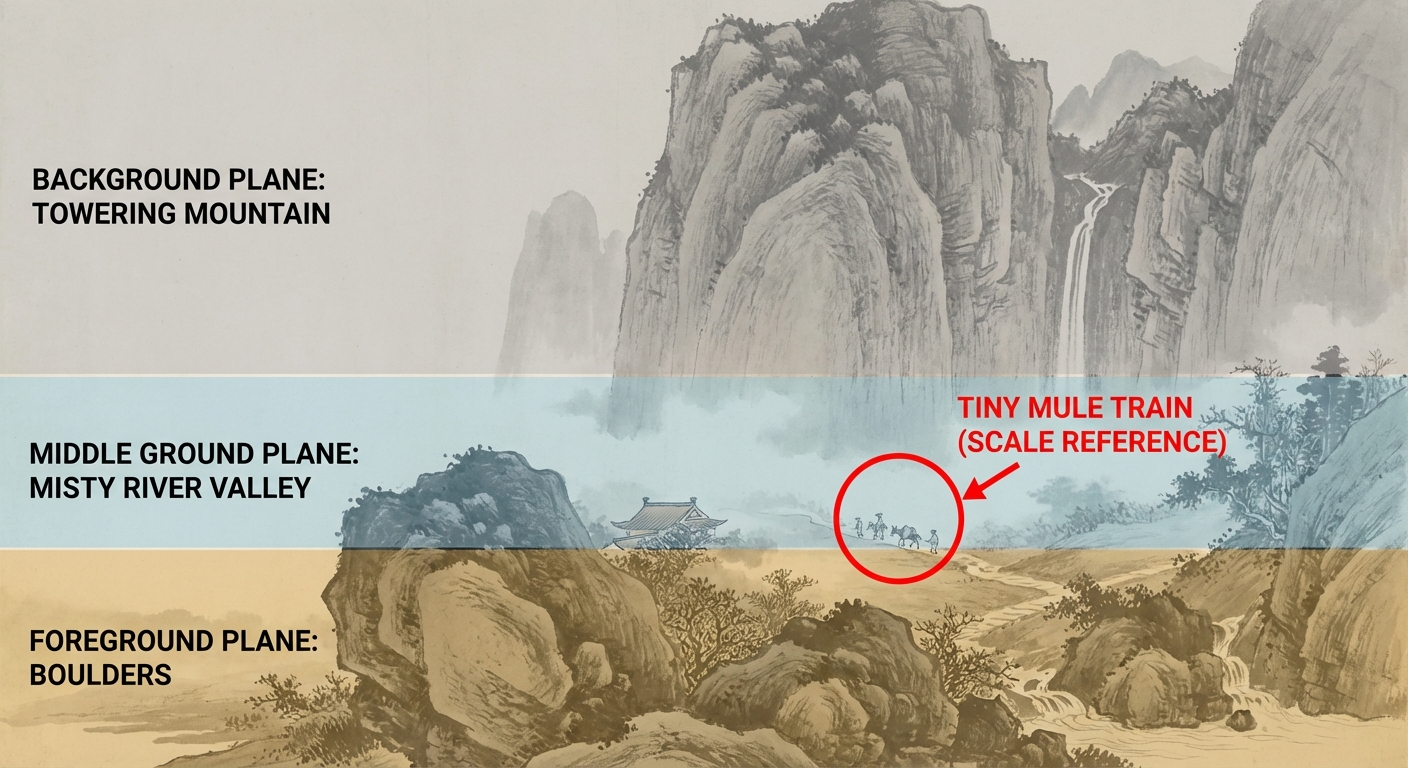
- Scale: Humans and donkeys are tiny brushstrokes at the bottom (Man is insignificant compared to Nature).
- Three Distances: Foreground (rocks), Middle ground (mist/travelers), Background (monumental vertical mountain).
- Technique: "Raindrop" texture strokes.
➼ The David Vases
- Date: Yuan Dynasty, 1351 CE. Blue and white porcelain.
- Significance: The "DNA" of blue-and-white porcelain. The Cobalt Blue came from Iran (trade via the Mongol Empire/Pax Mongolica).
- Function: Offerings for a Daoist temple altar.
- Decoration: Dragons and phoenixes (Yin/Yang, Emperor/Empress), handling rings shaped like elephant heads.
➼ Forbidden City
- Location/Date: Beijing. Ming Dynasty. 15th Century.
- Form: A micro-city organized on a strict North-South axis.
- Ideology: Separation of the celestial (Emperor) from the common.
- Outer Court: For state affairs (men only).
- Inner Court: Domestic space (family).
- Hall of Supreme Harmony: The largest structure, center of power, yellow roof tiles (Emperor's color).
➼ Chairman Mao en Route to Anyuan
- Date: 1969. Color Lithograph (based on oil painting).
- Context: Cultural Revolution. Art was strictly propaganda (Socialist Realism).
- Content: Young Mao Zedong marching to lead a miner's strike. He is "god-like," glowing, taller than the mountains.
- Medium: Lithograph allowed for mass reproduction (900 million copies). Replaced traditional ink painting which was seen as "elitist."
Korean and Japanese Art
➼ Gold and Jade Crown
- Location/Date: Silla Kingdom, Korea. 5th–6th Century CE.
- Context: The Silla kingdom was the "City of Gold." Found in a royal tomb.
- Form: Three remote branches (trees) and two antler shapes.
- Influences: Shamanism. The tree/antler motifs relate to Siberian techniques of worship (connecting heaven and earth). The jade ornaments (gogok) symbolize fertility/fruit.
➼ Portrait of Sin Sukju
- Location/Date: Korea. 15th Century. Ink and color on silk.
- Context: Confucianism reveres ancestors and scholars. Sin Sukju was a Prime Minister and scholar (helped create the Korean alphabet).
- Form: "Meritorious Subject" portrait. He wears official robes with a Rank Badge (peacocks). The face is realistic (wrinkles included), embodying the belief that the face reveals the soul.
➼ Todai-ji
- Location/Date: Nara, Japan. 743 CE (rebuilt 1700).
- Key Features:
- Great Buddha Hall (Daibutsuden): Largest wooden building in the world. Houses the colossal bronze Vairocana Buddha.
- Nio Guardian Figures: Located at the South Gate. Carved by the Kei School (Unkei and Kaikei). They used "joined-block" wood construction allowing for dynamic, muscular poses and fierce realism.
- Political Context: Built by Emperor Shomu to unite various clans under Buddhism.
➼ Ryoan-ji
- Location/Date: Kyoto, Japan. Muromachi Period. c. 1480.
- Type: Zen Buddhist Temple.
- The Dry Garden (Karesansui): 15 rocks arranged in gravel. Raked daily by monks (meditation in action). Interpreted as islands in the sea, or a tiger carrying cubs. Encourages meditation; incomplete view (you cannot see all 15 rocks at once).
- The Wet Garden: Contains a tea house and lotus pond.
➼ Night Attack on the Sanjô Palace
- Date: Kamakura Period, Japan. c. 1250–1300 CE. Handscroll (Emaki).
- Context: Depicts the Heiji Rebellion (samurai warfare). Marks the shift from aristocratic rule to Shogun (military) rule.
- Form: Read right-to-left. A continuous narrative.
- Beginning: Quiet tension.
- Middle: Chaos, fire, decapitations (high drama, diagonals).
- End: The lone archer escapes.
- Style: Yamato-e (Japanese style)—high angle view ("blown off roof"), strong colors, swift brushstrokes.
➼ White and Red Plum Blossoms
- Artist: Ogata Korin. c. 1710. Pair of twofold screens.
- Style: Rinpa School (combination of abstraction and naturalism).
- Technique: Tarashikomi (dripping wet paint into wet paint) creates the mottled texture of the tree trunks.
- Composition: A metallic, abstract stream (patterns of swirls) separates two naturalistic trees. Flattens space.
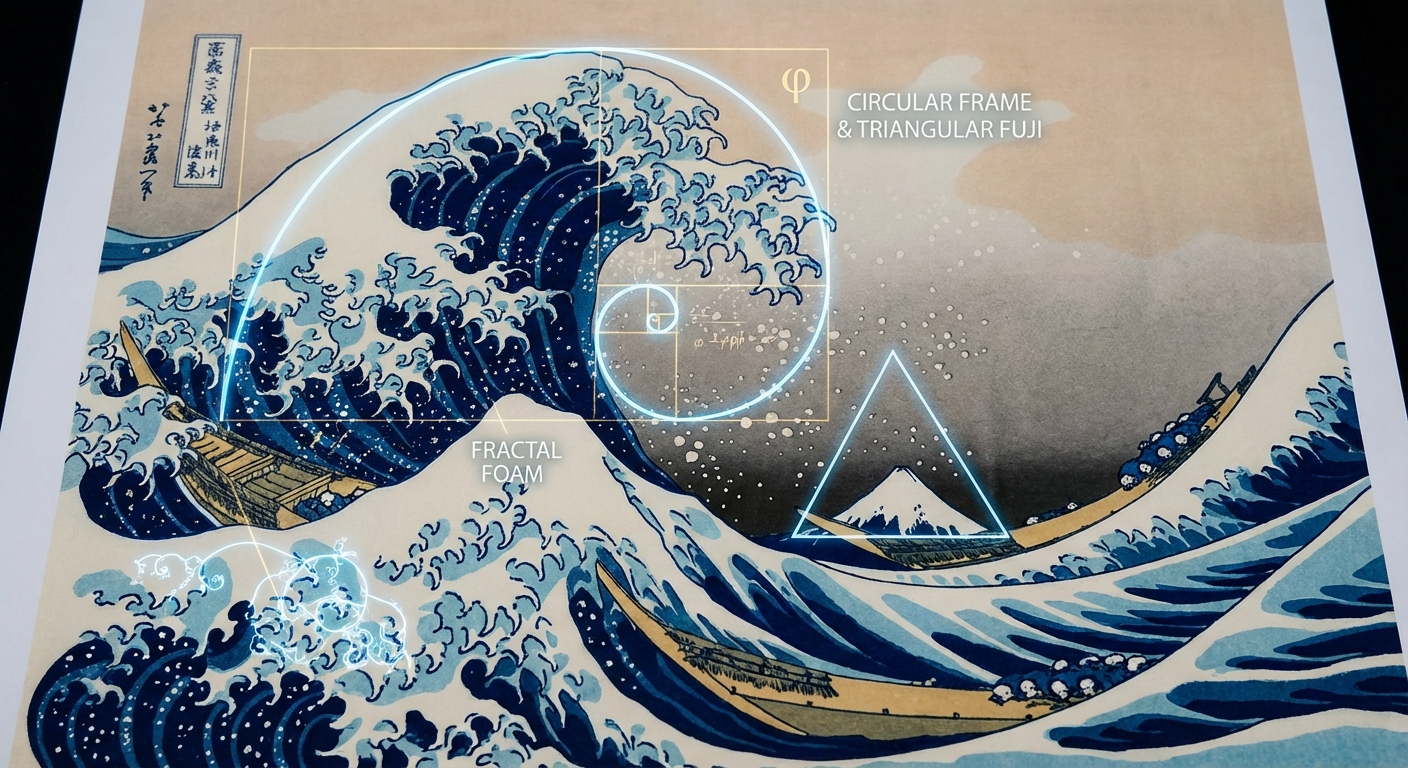
➼ Under the Wave off Kanagawa (The Great Wave)
- Artist: Katsushika Hokusai. 1830–1833.
- Medium: Polychrome woodblock print (Ukiyo-e).
- Context: Part of "36 Views of Mount Fuji." Ukiyo-e means "pictures of the floating world" (mass-produced art for city dwellers).
- Form: Use of Prussian Blue (synthetic dye from Europe). Low horizon line. Mount Fuji looks tiny/stable compared to the massive/fractal wave.
- Influence: Heavily influenced European Impressionists (Japonisme).
Common Mistakes & Pitfalls
- Confusing Buddhism and Hinduism: While they share roots (karma/reincarnation), AP questions focus on the differences.
- Recall: Stupas are Buddhist (relics); Temples are usually Hindu (dwelling of the god).
- Exception: Angkor Wat is Hindu plan but historically shifted between both.
- "Worshipping" the Stupa: Providing the wrong function. You do not go inside a stupa. You circumambulate (walk around) it. It is a diagram, not a hall.
- Mixing up Chinese Dynasties:
- Qin: Terra Cotta (Legalism/War).
- Han: Silk Banner (Daoism/Confucianism blend).
- Tang: Longmen Caves (International Buddhism).
- Song: Travelers Landscape (Neo-Confucianism).
- Yuan: David Vases (Mongol Rule).
- Misunderstanding the "Great Wave": Students often think it is a painting. It is a Woodblock Print. This implies mass production, collaboration (artist, carver, printer), and commercial purpose, not a singular museum piece for a palace.
- Jahangir's Halo: Assuming the halo in Mughal art is purely religious. It is political appropriation of European Christian iconography to suggest the Emperor's divine right to rule.