Unit 5: Factors Influencing Italian Lifestyle & Society
Unit 5: Factors That Impact the Quality of Life
This unit focuses on Theme: Contemporary Life (Vita Contemporanea). For the AP Italian Language and Culture exam, you must understand how education, career, health, and leisure interact to define "the good life" (la dolce vita) in Italy, and how these factors compare to your own culture.
Education and Career (Istruzione e Carriera)
In Italy, the quality of life is heavily influenced by one's educational path and the subsequent stability (or instability) of employment. The Italian approach to education differs structurally and philosophically from the American system.
The Italian School System (Il Sistema Scolastico)
Unlike the comprehensive high schools often found in the US, Italian students must choose a specialized path early on. Education is compulsory (obbligatoria) from age 6 to 16.
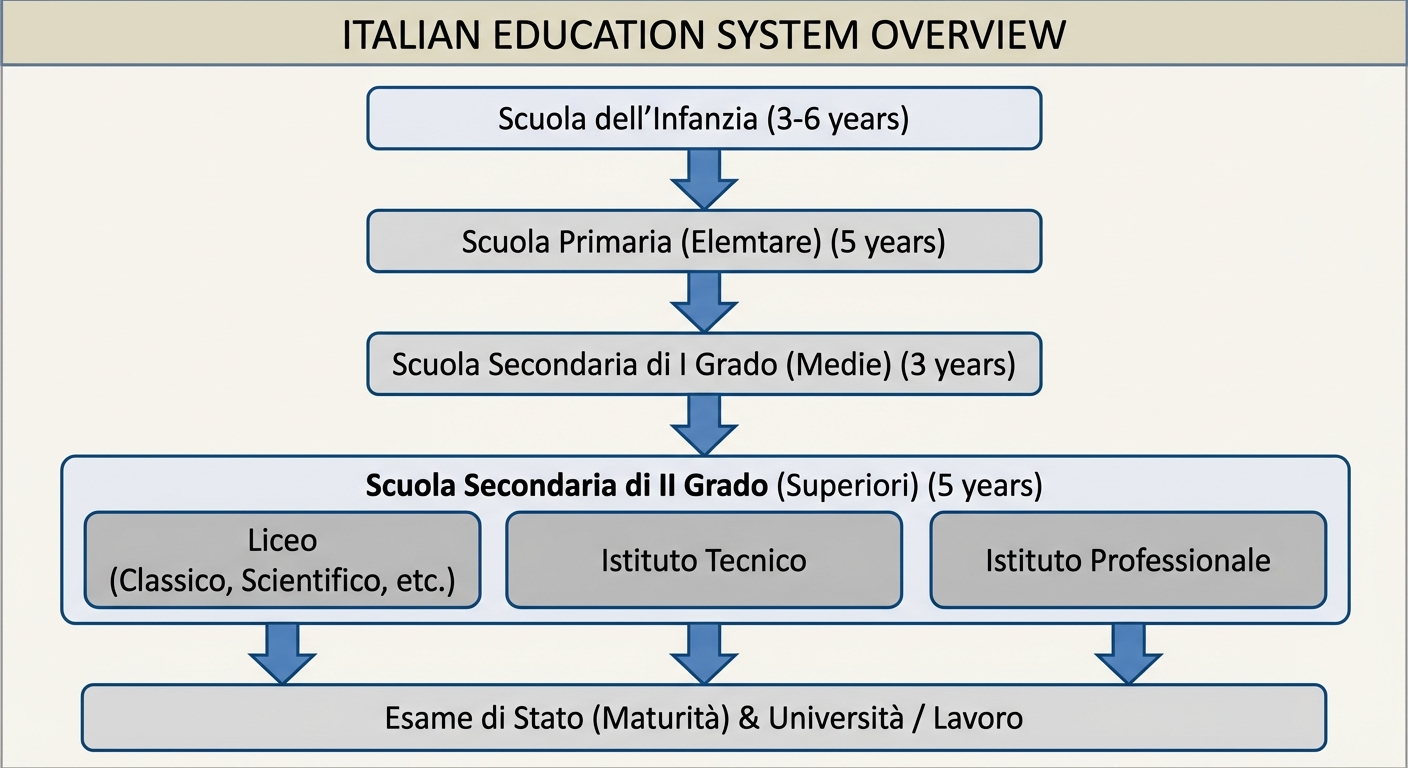
- Scuola dell'Infanzia (Pre-school, ages 3-6): Not mandatory but widely attended.
- Scuola Primaria (Elementary, 5 years).
- Scuola Secondaria di Primo Grado (Middle School, 3 years): Ends with an exam.
- Scuola Secondaria di Secondo Grado (High School, 5 years): This is the most crucial differentiation.
- Liceo: Academic focus (Classico, Scientifico, Linguistico). Prepares students for university.
- Istituto Tecnico: Technical/Economic focus (tourism, administration). Prepares for work or university.
- Istituto Professionale: Vocational focus (culinary arts, mechanics). Prepares directly for the workforce.
- L'Esame di Stato (La Maturità): The rigorous final exam at the end of high school required to graduate and enter university.
The University System (L'Università)
Following the Bologna Process, the university system is split into:
- Laurea Triennale: Bachelor’s degree (3 years).
- Laurea Magistrale: Master’s degree (+2 years).
Cultural Context: Italian universities often rely heavily on oral exams (esami orali) rather than just written papers or multiple-choice tests, emphasizing public speaking skills.
The Job Market (Il Mondo del Lavoro)
A critical factor affecting the quality of life in Italy is the employment landscape.
- Disoccupazione Giovanile: Youth unemployment is a persistent issue in Italy, often much higher than in Northern Europe or the US.
- La Fuga di Cervelli (Brain Drain): Because of high unemployment and low entry-level wages, many highly educated young Italians emigrate to find work commensurate with their degrees.
- Il Posto Fisso: A cultural ideal—a permanent, secure job with benefits (often in the public sector). While becoming rarer, it is still highly valued for the stability it provides.
- Mammoni: A (sometimes stereotypical) term for young adults who live with their parents into their 30s, often due to economic necessity rather than just cultural preference.
Health and Well-Being (Salute e Benessere)
Italy consistently ranks high in global life expectancy. This is attributed to a combination of diet, healthcare access, and lifestyle choices.
The Mediterranean Diet (La Dieta Mediterranea)
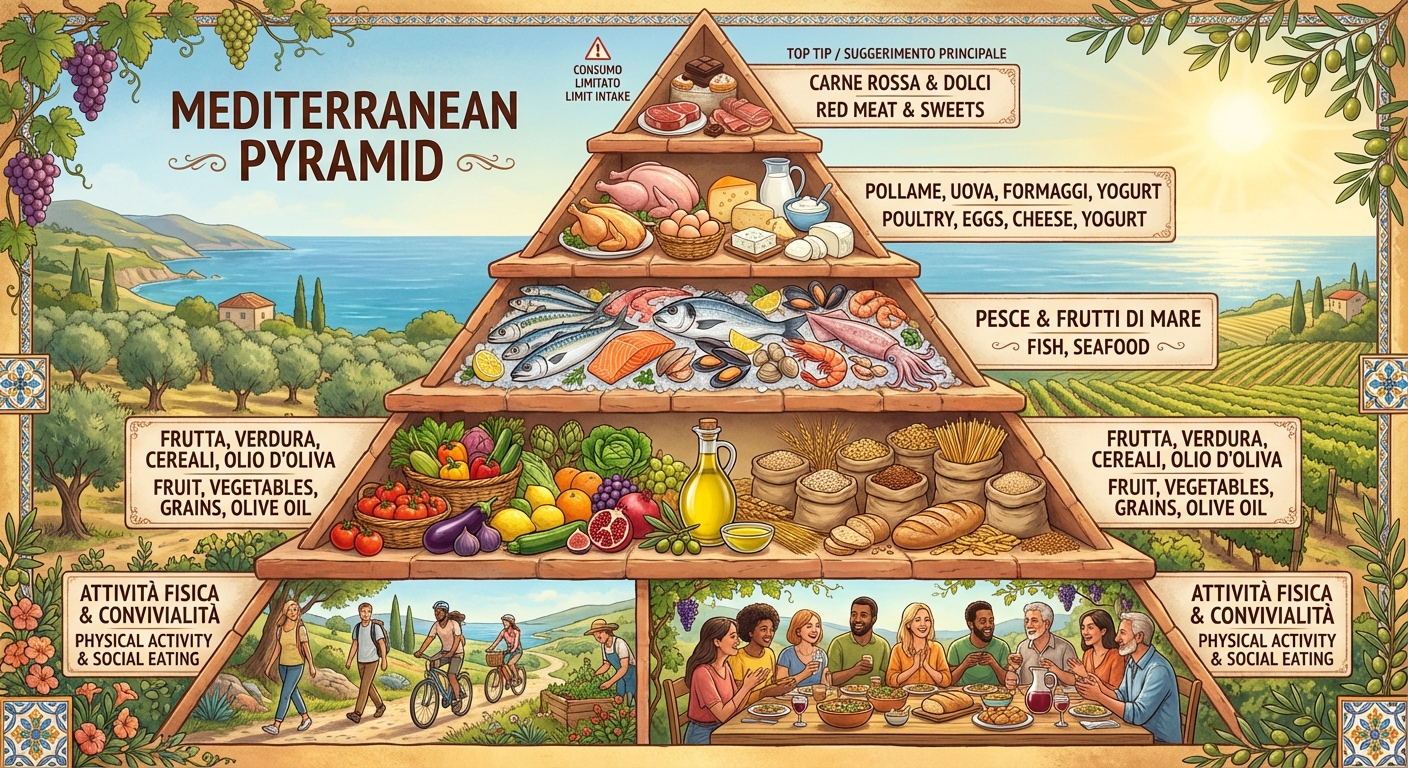
It is not just a list of foods, but a lifestyle recognized by UNESCO as Intangible Cultural Heritage.
- Key Components: High consumption of olive oil, legumes, unrefined cereals, fruits, and vegetables. Moderate consumption of dairy and wine. Low consumption of non-fish meat.
- Kilometro Zero (Km 0): A movement promoting local food (cibo locale) that has not traveled far, ensuring freshness and environmental sustainability.
- Slow Food: Originating in Italy (Piedmont) as a protest against fast food, this movement emphasizes traditional cooking, relaxed dining, and high-quality ingredients.
The Healthcare System (Il Sistema Sanitario)
- SSN (Servizio Sanitario Nazionale): Italy has a public, universal healthcare system. It is funded by taxes.
- Pro: Everyone has access to doctors and hospitals regardless of income.
- Con: Wait times (le liste d'attesa) for non-urgent procedures can be long.
Leisure and Sports (Svago e Sport)
How Italians spend their Tempo Libero (free time) is essential to their quality of life. The line between work and leisure is generally more distinct in Italy than in the US.
Sports Culture
- Il Calcio (Soccer): More than a sport, it is a national obsession. It dominates Sunday afternoons and daily conversation.
- Other Popular Sports: Cycling (ciclismo), skiing (sciare - very popular due to the Alps/Apennines), and volleyball (pallavolo).
- Palestras (Gyms): While gym culture exists, many Italians prefer outdoor activity or sports clubs over lifting weights.
Social Customs and Leisure
- La Passeggiata: An evening ritual (usually before dinner) where people dress up and walk through the town center (centro storico) to socialize and "see and be seen."
- Il Bar: The center of social life. Unlike American coffee shops where people work on laptops for hours, the Italian bar is for a quick espresso at the counter (al banco) or a social aperitivo in the evening.
- L'Aperitivo: A pre-dinner drink (like a Spritz) accompanied by light snacks meant to "open the stomach" (aprire lo stomaco) and socialize after work.
- Le Ferie: Vacation time is sacred. Most Italians take significant time off in August (Ferragosto - August 15th) to go to the beach (al mare) or mountains (in montagna).
Comparison Table: Italy vs. USA
| Feature | Italy | USA |
|---|---|---|
| High School | Specialized (Liceo vs. Tecnico) | Comprehensive (Electives system) |
| Sports | Club-based (outside school) | School-based (Varsity teams) |
| Food | Local, seasonal, long lunches | Convenience, fast-paced, portions |
| Work/Life | "Work to live" / long vacations | "Live to work" / fewer vacation days |
| Young Adults | Often live at home until marriage/30s | Often move out for college at 18 |
Common Mistakes & Pitfalls
- False Friend (Education): Do not translate "college" as collegio. In Italian, collegio usually refers to a boarding school. Use 'università' for college.
- Confusing Tempo and Volta:
- Tempo = Time (abstract, duration, weather). Non ho tempo. (I don't have time).
- Volta = Time (instance/occasion). Sono andato una volta. (I went one time).
- Bar Culture: Do not describe an Italian bar as a place primarily for alcohol (like a US pub). It is primarily a breakfast/coffee place that serves alcohol later.
- Stereotyping: Avoid saying "Italians only eat pizza and pasta." Discuss the variety (regional differences, Dieta Mediterranea health benefits) to show cultural competence.
- Graduation: Italians do not have a "graduation ceremony" with caps and gowns for high school. They have the oral exam (Maturità) and then a dinner. Graduation ceremonies are generally reserved for University (Laurea).
Key Vocabulary for the Exam
- Benessere: Well-being
- Equilibrio: Balance
- Gestire lo stress: To manage stress
- Tasso di disoccupazione: Unemployment rate
- Stile di vita sedentario: Sedentary lifestyle
- Previdenza sociale: Social security/welfare